Have you ever looked at your houseplant and wondered, “Why is my houseplant drooping?” The leaves may look limp, the stems may start bending, and a plant that looked perfectly healthy yesterday can suddenly appear completely exhausted.
Your first instinct might be to water it. But houseplant drooping does not always mean your plant is thirsty.
A houseplant can droop because the soil is too dry or because the roots sit in too much water and cannot function properly. Temperature changes, unsuitable light, transplant shock, pests, low humidity, and other environmental stresses can also cause wilting or leaf drop.
I learned this lesson myself with a baby rubber plant in my office.
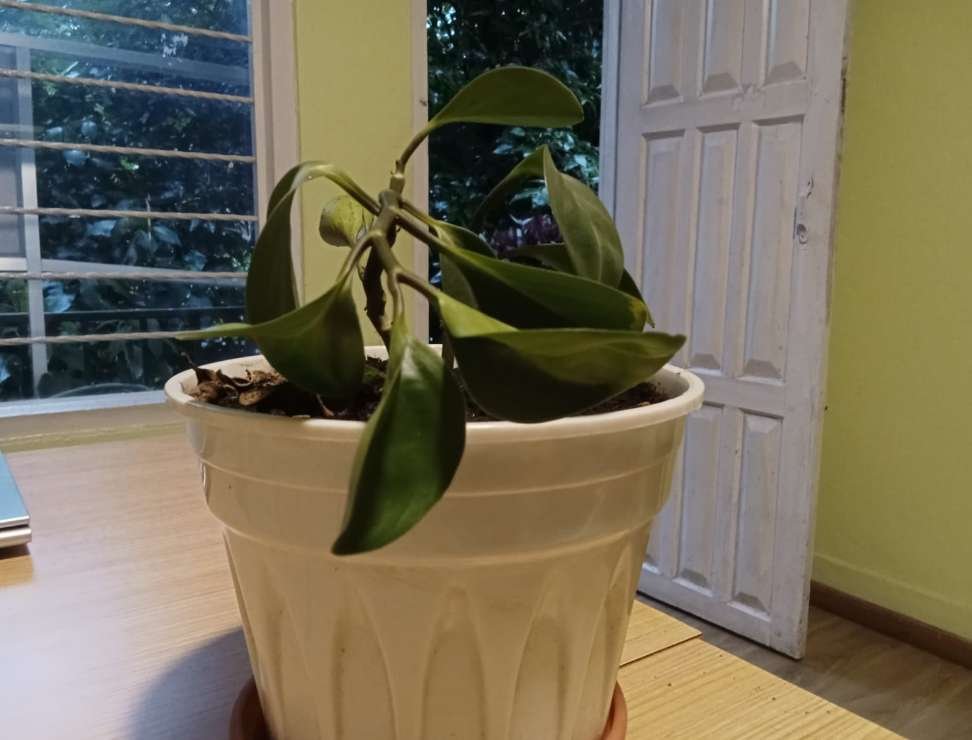
When I first noticed its leaves drooping, I assumed it was a drought. After all, drooping leaves seem like an obvious sign of thirst, right?
But not necessarily, though. More details later.
That experience made me realize something important about plant care: the symptom tells you something is wrong, but it does not always tell you what the problem is.
So before reaching for your watering can, let’s figure out what your plant is trying to tell you.
Table of Contents
Why Does Houseplant Drooping Occur?
Drooping, also called wilting, happens when plant cells lose enough water pressure that leaves and stems can no longer remain firm.
Plants continuously move water from their roots through the stem and into their leaves. Leaves also lose water through tiny pores called stomata during transpiration. When water is being lost faster than the plant can replace it, the tissues lose firmness, and the leaves can become limp.
Think of it simply like this:
Roots absorb water → water moves through the plant → leaves lose some water through transpiration.
When that balance is disrupted, drooping can occur. The problem is that the balance can be disrupted in more than one way.
Your plant might not have enough water available. Or it might have plenty of water around its roots but be unable to absorb it properly.
That is why diagnosis matters.
10 Common Reasons Your Houseplant Is Drooping
Here are 10 common reasons to know why your houseplant is drooping.
1. Your Plant Is Underwatered
This is probably the first explanation most people think about, and sometimes they are right.
When the potting mix becomes too dry, roots have less water available to absorb. As the plant loses water through its leaves, the cells lose firmness, and the foliage begins to wilt. Prolonged water stress can eventually cause leaf drop, slowed growth, and serious damage.
What underwatering looks like
Your plant may have:
- Limp or floppy leaves
- Dry, lightweight potting mix
- Brown or crispy leaf edges
- Leaves that curl inward
- Drooping that improves after proper watering
- Older leaves yellowing and dropping
The RHS notes that wilting, brown crispy edges, and premature flower or leaf loss can indicate insufficient water.
How to fix it
Don’t simply pour a little water onto the surface every day. First, check the moisture deeper in the pot.
Push your finger a few centimeters into the potting mix. If it is very dry, water the plant thoroughly until water begins to drain from the drainage hole.
Then allow excess water to drain away. The goal is not to keep every plant constantly wet. The correct moisture level depends on the plant species and growing conditions.
Simple rule: Dry soil + drooping leaves = underwatering is a strong possibility.
But don’t stop your diagnosis here because the exact opposite problem can produce almost the same symptom.
2. You Are Overwatering Your Plant
This is where many plant parents get caught.
You see a houseplant drooping. You think, “It needs water.” You water it. But it still looks droopy. So you water it again. And again.
Eventually, the real problem becomes too much water.
Overwatering can reduce the amount of oxygen available around the roots. Roots need oxygen for normal respiration and functioning, and prolonged waterlogging can damage roots and contribute to root rot. A plant with damaged roots may then struggle to take up water even though its potting mix is already wet.
That creates one of the most confusing situations in houseplant care: A thirsty-looking plant with wet soil.
Signs that overwatering may be responsible
Look for:
- Wet soil that stays wet for a long time
- Yellowing leaves
- Dropping leaves
- Soft or mushy stems
- A musty smell from the potting mix
- Brown or black, mushy roots
- Sudden decline despite frequent watering
The RHS specifically warns that overwatering can cause wilting and that plants can be mistakenly watered again when the actual problem is waterlogging.
How to fix it
Stop watering until you have assessed the moisture level.
Check whether:
- The pot has a drainage hole.
- Water can actually escape from the bottom.
- The potting mix is remaining saturated for too long.
- The roots are healthy or showing signs of rot.
If the roots are dark, soft, and mushy rather than firm, root damage may already be involved.
Remember: Houseplant Drooping + wet soil does NOT mean “Give it more water.”
It means investigate the roots and drainage first.
3. Poor Drainage Is Keeping the Roots Too Wet
Sometimes the problem isn’t simply how much you water. It is where the water goes afterward.
A plant may be watered correctly but still suffer if excess water cannot drain away.
Containers without drainage holes are particularly risky because water can accumulate at the bottom of the pot. Even if the upper layer appears reasonably dry, the lower root zone may remain saturated.
Good drainage is an important part of houseplant care. The RHS recommends containers with drainage holes so excess water can escape.
Why does this matter?
Roots need both Water and Oxygen. Too little water causes dehydration. Too much water can reduce oxygen availability around the roots.
So healthy roots need a balance.
What can you do?
Check the bottom of your pot. If there is no drainage hole, consider moving the plant into a suitable container that allows excess water to escape.
Also check whether the potting mix has become compacted and drains very slowly.
Don’t assume that adding more water will solve houseplant drooping. Sometimes the plant needs better drainage, not more water.
4. Root Rot Is Preventing the Plant From Taking Up Water
Root rot often results from prolonged excess moisture and poor drainage. The frustrating part is that a plant with root rot can look dehydrated even when its soil is wet.
Why? Because damaged roots cannot function normally.
The roots are supposed to absorb water and nutrients and transport them into the rest of the plant. If too much moisture has damaged the root system, the plant can struggle to maintain an adequate water supply to its leaves.
Signs to check for
If you suspect root problems, gently remove the plant from its pot and inspect the roots. Healthy roots should generally be firm rather than mushy.
Problematic roots may be:
- Brown or black
- Soft
- Mushy
- Falling apart
- Accompanied by a sour or unpleasant smell
What to do?
If the plant has significant root damage, simply putting the plant back into the same wet soil may not solve the problem.
Remove obviously damaged roots with clean tools and move the plant into an appropriate, well-draining growing medium if necessary.
Most importantly, correct the condition that caused the root problem in the first place. Otherwise, the cycle can repeat.
5. Your Plant Is Getting Too Much Direct Sunlight
Many indoor plants prefer bright, indirect light rather than intense direct sunlight. That’s why more sunlight is not always better.
Excessive sunlight can increase heat and water loss and may scorch foliage (a group of leaves). Plants that are adapted to lower-light conditions can be especially vulnerable when suddenly placed in strong sunlight.
Recent University of Minnesota Extension guidance also warns that houseplants accustomed to indoor light can scorch quickly when moved into direct outdoor sun.
Signs of too much light
You may notice:
- Houseplant drooping during hot parts of the day
- Bleached-looking foliage
- Brown or crispy patches
- Scorched leaf surfaces
- Leaves becoming dry despite adequate soil moisture
How to fix it?
A bright location with filtered or indirect light may be more appropriate. So, move the plant away from intense direct sunlight.
For example, instead of placing a sensitive houseplant directly against a hot south- or west-facing window, consider moving it farther from the glass or using a sheer curtain to soften the light.
Important: Don’t confuse bright light with direct sunlight. They are not always the same thing.
6. Your Plant Is Not Getting Enough Light
Too much light can stress a plant, but too little light can cause problems too.
Insufficient light can reduce photosynthesis and weaken overall growth. Illinois Extension lists lack of light as a common cause of general houseplant problems and leaf loss.
A plant that is kept in a very dark location may gradually become:
- Leggy
- Weak
- Pale
- Slow-growing
- More prone to leaf loss
In some cases, weak stems may cause houseplant drooping.
How to fix it?
- Move the plant gradually toward a brighter location that suits its species.
- Avoid suddenly taking a plant from a dark corner and placing it in harsh direct sunlight. Instead, aim for the light level appropriate to the particular plant.
For many common houseplants, bright indirect light is a useful starting point.
7. Sudden Temperature Changes Are Stressing Your Plant
Your plant doesn’t just respond to watering and light. It also responds to temperature.
Sudden environmental changes can cause stress, and Illinois Extension identifies sudden temperature changes and cold drafts among common causes of houseplant problems.
An indoor plant might experience temperature stress if it is placed:
- Directly beside an air conditioner
- Near a heater
- Against a cold window
- In a drafty doorway
- Outside suddenly after being indoors
- In a location with large day-to-night temperature fluctuations
The RHS also notes that cold damage can cause leaf droop and even whole-plant collapse in susceptible houseplants.
How to fix it?
- Try to keep your plant away from sudden temperature extremes and strong drafts.
- If you move a houseplant outdoors, introduce it to the new environment gradually rather than exposing it immediately to strong sun, heat, wind, or cold.
8. Low Humidity Is Causing Excessive Water Loss
Humidity, the amount of water vapour in the air, also affects how quickly plants lose water through transpiration.
When the surrounding air is very dry, water can leave the leaves faster. If the roots cannot replace that water quickly enough, the plant may develop signs of water stress.
This can be particularly noticeable in homes with very dry indoor air.
Signs that dry air may be contributing
Look for:
- Brown leaf tips
- Crispy edges
- Curling leaves
- Wilting
- Increased water loss
However, don’t automatically assume that every drooping plant needs higher humidity. Humidity is only one possible factor.
How to help?
Depending on the plant, you can consider:
- Grouping plants together
- Using a humidifier
- Moving humidity-sensitive plants to a naturally more humid room
But remember that good airflow and appropriate soil moisture still matter. Increasing humidity will not fix root rot or chronic overwatering.
9. Your Plant Is Experiencing Transplant Shock
Did your plant start drooping shortly after you repotted it? Then transplant shock may be involved.
Moving a plant disturbs its root system and changes its growing environment. Illinois Extension identifies transplant shock as one possible cause of general defoliation in houseplants.
Even when you repot carefully, the plant may temporarily respond with:
- Drooping leaves
- Slower growth
- Leaf drop
- Temporary stress
What should you do?
Don’t immediately respond by heavily watering or fertilizing the plant.
Instead, you can do these:
- Keep it in an appropriate light level.
- Maintain suitable moisture.
- Avoid unnecessary disturbance.
- Protect it from temperature extremes.
- Give the roots time to establish.
A recently repotted plant needs stability more than constant intervention. You can repot your plants easily without killing them.
10. Pests or Diseases Are Stressing the Plant
Sometimes the problem isn’t water or light at all. Insects and diseases can interfere with healthy plant growth and cause foliage problems.
Illinois Extension lists insect and disease attacks among common causes of unhealthy houseplants.
For Peperomia species, North Carolina Extension recommends monitoring for pests such as mealybugs, spider mites, whiteflies, and other common houseplant pests.
What to inspect?
You should look closely at:
- The underside of leaves
- Leaf joints
- New growth
- Stems
- Areas where leaves meet the stem
Look for:
- Fine webbing
- Tiny moving insects
- Cotton-like clusters
- Sticky residue
- Discolored or distorted leaves
- Small spots or unusual marks
What to do?
First, identify the pest or disease rather than spraying the plant with random treatments. Early detection makes management much easier.
And remember: a pest problem should not automatically be treated as a watering problem.
My Baby Rubber Plant Story: The Droop That Taught Me Not to Panic
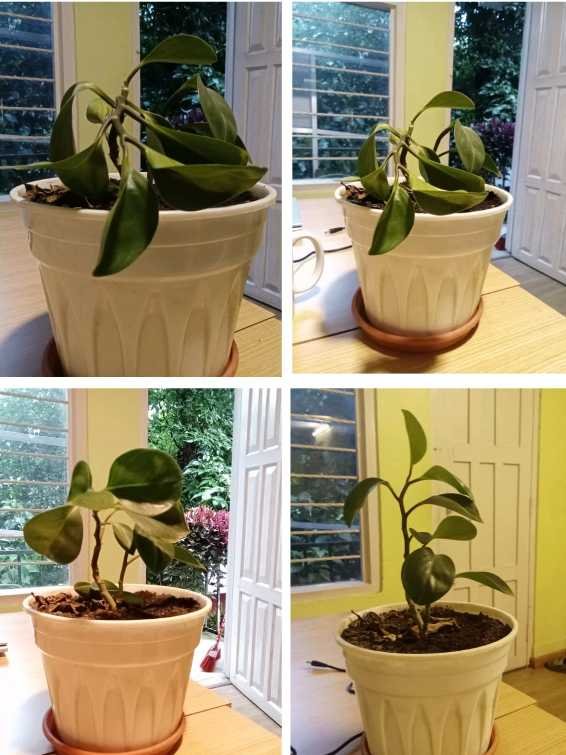
This is where my own experience with a baby rubber plant comes in.
I had a small baby rubber plant (Peperomia obtusifolia) on my office desk.
At first, I thought that plant was not real because of its thick and glossy leaves. But when I realized it was real, I thought that it looked like one of those plants that could tolerate almost anything.
Then it was moved to a low-light area, but the changes began then.
For the first few days, it looked perfectly happy. Then I noticed the leaves weren’t standing as firmly as before.
They were drooping.
My first thought was simple: “It needs water.”
But then I checked the soil; it was not dry at all. It was still moist. That made me question my first assumption.
Peperomia obtusifolia has thick, succulent-like leaves and is intolerant of wet soil. Overwatering can cause yellowing and contribute to root rot. It prefers bright indirect light and well-drained conditions.
So, I let it be like that for a few days in the same place.
Sadly, there were not many changes. Then, I started looking at the plant as a whole.
- Was the soil wet? Yes.
- Was it sitting beside a cold draft? No.
- Was there evidence of pests? None that I could see.
- Was the plant receiving suitable light? Not much.
Oh! Then it hit me. I felt so foolish for missing such details. Then I brought it where there was enough indirect light.
The experience taught me something that I now keep in mind whenever I see a drooping houseplant:
Don’t treat the symptom before understanding the cause.
Drooping is the plant’s way of telling you that something is out of balance. It isn’t necessarily asking for water.
How to Tell Whether Your Drooping Houseplant Needs Water
This is probably the most important part of the entire article. Before watering a drooping plant, check the soil.
- If the soil is very dry: Underwatering is more likely.
- If the soil is wet: Do not automatically add more water.
Investigate drainage, root health, and the plant’s recent care conditions.
- If the soil is moist but the plant is still drooping:
Look at other possibilities such as:
- Light stress
- Temperature changes
- Root problems
- Low humidity
- Transplant shock
- Pests
The RHS specifically recommends checking moisture below the surface because wilting can result from either too little water or too much water.
Quick Diagnosis: What Is Your Drooping Plant Trying to Tell You?
| What you see | Possible cause | What to check |
| Drooping + very dry soil | Underwatering | Soil moisture |
| Drooping + wet soil | Overwatering/root stress | Roots and drainage |
| Drooping + yellow leaves | Watering/root problem | Soil and roots |
| Drooping + crispy brown edges | Dryness/heat/low humidity | Moisture and environment |
| Drooping after repotting | Transplant shock | Recent root disturbance |
| Drooping after moving outdoors | Light/temperature stress | Sun and temperature |
| Drooping near AC/heater | Temperature stress | Drafts and heat |
| Drooping + pests | Insect damage | Leaves and stems |
| Drooping in intense sun | Heat/light stress | Light exposure |
| Drooping with mushy roots | Root rot | Root condition |
Important: These signs are clues, not absolute diagnoses. The same symptom can have more than one cause, so always consider the plant’s overall condition.
How to Revive a Drooping Houseplant?
Once you’ve identified the likely cause, avoid trying ten different solutions at once. Instead, make the correction that matches the diagnosis.
Step 1: Check the soil
Don’t water based only on how the leaves look. Feel the growing medium several centimeters below the surface.
Step 2: Check the drainage
Make sure excess water can drain out of the container.
Step 3: Inspect the roots if necessary
If the soil stays wet and the plant keeps declining, inspect the roots for signs of rot.
Step 4: Evaluate the light
Ask: Is it receiving too little light? Or too much direct sunlight?
Both can cause stress.
Step 5: Look at the environment
Check whether the plant has recently experienced:
- A move
- Repotting
- Temperature changes
- AC or heating
- Very dry air
- Strong sunlight
Step 6: Inspect for pests
Look carefully at leaves, stems, and new growth.
Step 7: Give the plant time
One of the biggest mistakes plant parents make is constantly changing the plant’s conditions.
You water it. Then move it. Then fertilize it. Then repot it. Then water it again.
That can create even more stress.
Once you’ve identified the likely problem and corrected it, give the plant stable conditions and time to respond.
What NOT to Do When Your Plant Is Drooping?
- Don’t automatically water it: Drooping is not proof that the soil is dry.
- Don’t fertilize a stressed plant immediately: Fertilizer is not a universal treatment for drooping.
- Don’t place it in direct sunlight to “help it recover”: If light stress is the problem, more intense sunlight can make the situation worse.
- Don’t repot immediately without checking the cause: Repotting is useful when there is a genuine root, soil, or container problem, but unnecessary disturbance can add stress.
- Don’t rely on a fixed watering schedule: “Water every Sunday” sounds simple, but plants do not use the same amount of water every week.
Water needs change with:
- Plant species
- Pot size
- Light
- Temperature
- Humidity
- Growth rate
- Potting medium
The RHS recommends checking the growing medium rather than relying solely on a fixed watering interval.
How to Prevent Your Houseplant From Drooping Again
Prevention starts with understanding your particular plant.
1. Learn its natural water requirements: A baby rubber plant, for example, has thicker, succulent-like leaves and does not appreciate constantly wet soil.
2. Use a container with drainage: Excess water needs somewhere to go.
3. Match light to the plant: Don’t assume every houseplant wants a sunny windowsill.
4. Watch environmental changes: Sudden changes in temperature, light, or location can stress houseplants.
5. Check plants regularly: A quick inspection of soil, leaves, and stems can help you catch problems early.
6. Avoid watering on autopilot: Let the plant’s growing conditions guide your watering rather than the calendar.
Frequently Asked Questions (FAQs)
Can a drooping plant recover?
Yes, many houseplants can recover from temporary water stress or environmental stress once the underlying problem is corrected. The chances of recovery depend on how severe and how long-lasting the problem has been.
Should I water a drooping plant immediately?
Not necessarily. First check the soil. If it is dry, underwatering may be responsible. If it is already wet, adding more water could worsen a waterlogging or root problem.
Why is my plant drooping even though I watered it?
Several explanations are possible. The soil may still be too wet, the roots may be damaged, or the plant may be experiencing heat, light, temperature, humidity, transplant, or pest stress.
Why is my plant drooping but the soil is wet?
Wet soil with drooping foliage is a warning sign to investigate the roots and drainage rather than simply adding more water. Waterlogged conditions can impair root function and contribute to wilting.
Can too much sunlight make a plant droop?
Yes. Excessive light and heat can increase water loss and damage foliage. Some houseplants can develop scorched, crispy, or bleached leaves when exposed to intense direct sunlight.
Can low humidity cause drooping leaves?
It can contribute to water stress because dry air can increase water loss through transpiration. However, low humidity is only one possible cause and should not be assumed without considering soil moisture and other environmental conditions.
Why is my baby rubber plant drooping?
A baby rubber plant, or Peperomia obtusifolia, may droop when conditions are too wet or too dry, and it can also respond to unsuitable light, drafts, or other environmental stress. This species prefers bright indirect light and well-drained conditions and is particularly susceptible to problems from overwatering.
How long does it take for a drooping plant to recover?
There isn’t one universal recovery time. A mildly wilted plant may improve relatively quickly after the underlying issue is corrected, while plants suffering from root damage or prolonged stress can take much longer. Focus on correcting the cause rather than trying to force rapid recovery.