The Grand Canyon is one of those places that seems almost impossible to imagine changing. Its enormous cliffs, deep valleys, and the Colorado River have been shaped over millions of years.
I won’t lie, when I first saw the photos of the Grand Canyon flood, I did the same thing everyone does with a disaster that’s thousands of miles away. I scrolled, said “wow, terrifying,” and almost moved on.
Then I read that the flood wiped out footbridges, tore apart a campground, and knocked out nearly half the water pipeline serving one of the most visited national parks on Earth in a single afternoon. That’s when it stopped feeling like “just another storm” and started feeling like a warning label.
But on August 29, 2026, a powerful flash flood that tore the bottom of the Grand Canyon showed just how quickly a landscape can change. More on what happened later.
This flood could easily be labelled as a freak weather event. But it wasn’t. Why? Because several environmental factors were interacting at once: rainfall, topography, soil, vegetation, wildfire, and human preparedness. The flood was a reminder that natural disasters rarely have just one story. Rainfall, Topography, Soil, Vegetation, Wildfire- everything matters! And how prepared we are matters too.
But the Grand Canyon is not the only landscape facing the growing risks associated with extreme flooding. You can also read our article about the recent flooding along the Trishuli River in the Nepal–Tibet region and the importance of trees in avoiding such disasters.
These events are more than disaster headlines. They allow us to understand how landscapes, climate, vegetation, and human preparedness interact.
Table of Contents
What Actually Happened in the Grand Canyon?
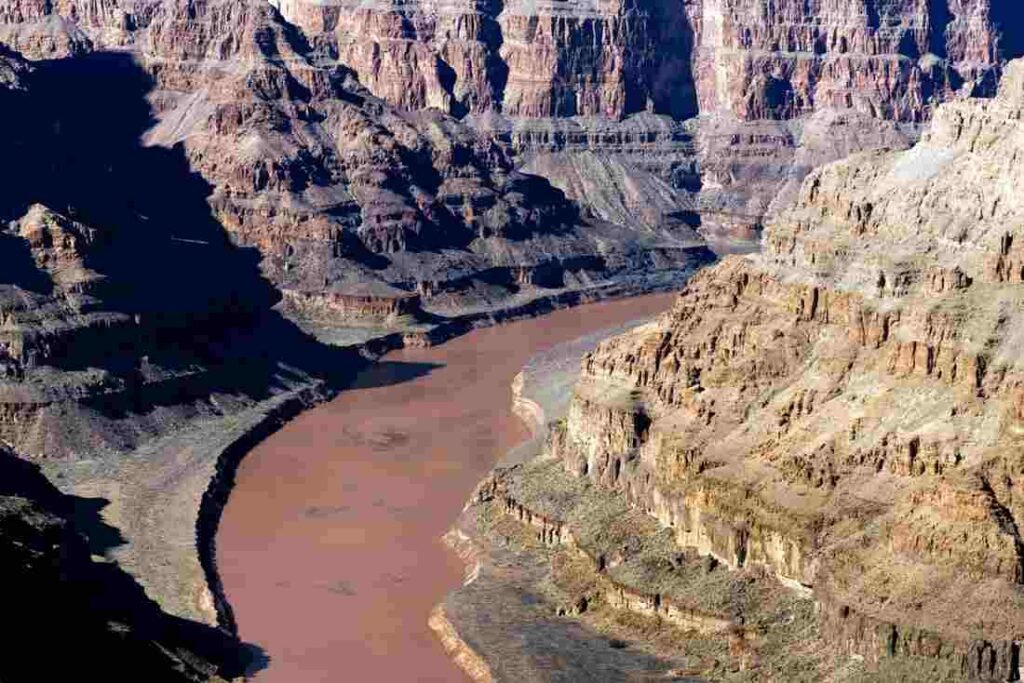
On August 29, 2026, intense rainfall triggered a flash flood through the Bright Angel Creek area of Grand Canyon National Park. Fast-moving water carried mud, rocks, and debris through the canyon, damaging trails, footbridges, the Bright Angel Campground, and the Phantom Ranch area, while also severely damaging the Transcanyon Waterline, a critical source of water for the South Rim.
The flood also led to rescues and fatalities. By September 2, the National Park Service had reported two hiker deaths, 82 survivors rescued, and one person still missing.
The danger was compounded by the landscape’s recent history: parts of the watershed had been affected by the 2025 Dragon Bravo Fire, leaving some areas more vulnerable to runoff, erosion, and debris flows during intense rainfall.
The event therefore wasn’t simply a story about heavy rain. It was a reminder of how rainfall, topography, wildfire, soil, and water systems can interact to create serious hazards.
7 Environmental Lessons to Learn More
Here are 7 environmental lessons that we can learn from the recent natural disasters:
1. Flash Floods Can Turn a Beautiful Landscape Dangerous in Minutes
One of the most important lessons from the Grand Canyon flash flood is how quickly conditions can change.
The Grand Canyon’s steep terrain means that rainfall can move rapidly downhill through narrow drainage channels. The National Park Service warns that flash flooding can occur even when it is not raining where a person is standing because storms can occur upstream or elsewhere in the watershed.
This makes flash flooding particularly dangerous in deep canyons. A clear sky does not always mean a safe canyon. Rain falling miles away can eventually become a wall of fast-moving water, sediment, rocks, and debris.
What can we do?
The solution isn’t to fear natural landscapes. It is to understand them.
People living in or visiting flood-prone areas can:
- Pay attention to weather and flood warnings.
- Avoid hiking through washes or narrow drainage channels during storms.
- Leave low-lying areas when authorities issue warnings.
- Support better flood monitoring and early-warning systems.
After the Dragon Bravo Fire, the National Park Service worked with the U.S. Geological Survey to install additional stream and precipitation gauges around the Bright Angel Creek watershed to improve monitoring and warnings.
That is environmental action we can actually support: better information, better preparation, and faster warnings.
2. Wildfires Don’t Always End When the Flames Go Out
The Grand Canyon flood also highlights something many people don’t realize: wildfire effects can continue long after the fire is extinguished.
The Dragon Bravo Fire began on July 4, 2025, and burned about 149,399 acres on the Kaibab Plateau and surrounding areas. The fire affected several watersheds connected to the Colorado River, including Bright Angel Creek.
When severe fire removes vegetation and ground cover, rain can interact with the landscape differently.
According to the U.S. Geological Survey, wildfires can remove vegetation, expose soil, alter soil properties, increase runoff, and make landscapes more vulnerable to erosion and debris flows.
The process can look something like this:
Wildfire → vegetation loss → exposed soil → increased runoff → erosion → sediment and debris → greater flood and debris-flow hazards
It doesn’t mean every wildfire will cause a major flood. The outcome depends on rainfall intensity, slope, soil, vegetation, fire severity, and other conditions.
But it shows why post-wildfire recovery matters.
3. Healthy Vegetation Is Part of the Natural Defense System
This is where the story connects directly to something as simple as planting and caring for plants. Vegetation cannot stop every flood. But healthy vegetation can play an important role in protecting soil and influencing how water moves across a landscape.
Plant roots can contribute by holding soil together, while vegetation and organic material can slow water movement and support infiltration by reducing the direct impact of rainfall. When vegetation is severely damaged, more soil can become exposed to rainfall and erosion.
The USGS explains that vegetation loss after wildfire can leave soils vulnerable to erosion, while changes in soil conditions can increase surface runoff. This is one reason the importance of forests and vegetation goes far beyond producing oxygen.
Plants are part of the relationship between:
soil + water + roots + microorganisms + wildlife + climate.
And that means protecting vegetation is not simply about making a landscape look green. It is about maintaining the natural systems that help landscapes function.
What can we do?
We don’t need to start by planting thousands of trees.
We can start by doing simple things like:
- Protecting existing forests and native vegetation.
- Growing native plants suited to local conditions.
- Supporting responsible reforestation and habitat restoration.
- Protecting wetlands, grasslands, forests, and riparian areas.
If you are interested in how individual trees can contribute to environmental protection, you can also explore our article on tree planting and climate change and our guide to the importance of forests.
4. Soil Is More Important Than We Usually Think
When we talk about environmental disasters, we often focus on rain, rivers, trees, and people. But there is another important piece of the puzzle: soil.
Soil is more than dirt. It stores water, supports plant roots and microorganisms, and helps regulate how rainfall moves through a landscape. When wildfire severely alters soil structure, rainfall may infiltrate more slowly, leading to increased surface runoff and erosion. On steep terrain, that runoff can carry loose soil, ash, rocks, and other debris downhill.
What can we do?
Soil conservation can begin in surprisingly small places such as gardens and yards.
Here’s what we can do:
- Keep soil covered with plants or appropriate organic material.
- Avoid unnecessary bare soil.
- Grow plants that suit the local climate.
- Reduce excessive soil disturbance.
- Use water wisely.
- Protect existing vegetation around slopes and waterways.
These actions won’t prevent a disaster like the Grand Canyon flood. But environmental protection is rarely about finding one magical solution. It is about reducing vulnerability wherever we can.
5. One Disaster Can Increase the Risk of Another
Perhaps the most important lesson from the Grand Canyon is that environmental problems can be connected.
A wildfire doesn’t necessarily cause a flood. Heavy rain doesn’t necessarily cause a catastrophic flood either. But when several risk factors overlap, the situation can become much more dangerous.
Environmental hazards rarely exist in isolation. A wildfire can alter vegetation and soil, while intense rainfall can intensify those changes, increasing runoff, erosion, and debris-flow hazards. This is why scientists and land managers study entire watersheds rather than individual hazards separately.
Think of the environment as a chain:
Climate → vegetation → wildfire → soil → rainfall → runoff → rivers → people
A change in one part can influence another. Understanding those connections is one of the most useful things we can do as environmental citizens.
6. Climate Change Makes Extreme Weather an Important Question
Whenever a major flood occurs, one question naturally appears:
Was climate change responsible?
The honest answer is more complicated than simply saying yes or no. We should not claim that climate change directly caused the 2026 Grand Canyon flood without a specific scientific attribution study.
However, climate change can influence the background conditions in which extreme weather, drought, wildfire, and heavy precipitation occur.
For example, NOAA reported that July 2026 was the warmest July on record for the contiguous United States, while several regions still experienced major heavy-rain and flash-flood events.
This illustrates an important point: A warmer world does not simply mean “less rain.”
Climate change can affect temperature, drought, wildfire conditions, precipitation patterns, and the likelihood of some types of extreme events.
That is why climate action cannot focus on just one problem.
We need to think about:
- Reduce greenhouse-gas emissions.
- Protect and restore ecosystems.
- Improve water and land management.
- Prepare communities for extreme weather.
7. The Best Environmental Action
It is easy to look at a disaster like the Grand Canyon flood and feel powerless.
What can one person possibly do about a huge wildfire, a flash flood, or a changing climate?
Quite a lot, but not alone. We should also be realistic. Planting a tree will not stop a flash flood. Recycling one bottle will not solve climate change. And one person cannot restore an entire watershed.
But that doesn’t make individual action meaningless. Our actions become powerful when they are combined with better policies, scientific research, ecosystem protection, responsible land management, and community preparedness.
Here are some things that we all can do:
- Protect plants and ecosystems: Grow and protect native vegetation rather than treating plants as decoration alone. Support forests, wetlands, grasslands, rivers, and other natural habitats.
- Take wildfire risk seriously: Support responsible wildfire prevention, monitoring, restoration, and land management.
- Protect water: Use water responsibly and support healthy watersheds.
- Prepare for extreme weather: Pay attention to warnings, support early-warning systems, and understand local flood risks.
- Learn before sharing: Environmental problems are complicated. Before sharing a dramatic claim online, check whether it comes from a reliable scientific or government source.
The goal isn’t to become frightened of nature. The goal is to become better prepared to live with it.
What Does the Grand Canyon Flood Teach Us About the Environment?
The 2026 Grand Canyon flood is a tragic reminder that landscapes are constantly interacting with one another.
The biggest lesson isn’t that nature is becoming our enemy. It is that nature is connected.
Rainfall interacts with soil. Soil interacts with vegetation. Wildfire changes vegetation and soil. Topography determines how water moves. And human decisions influence how prepared we are for the consequences.
When we protect forests, restore vegetation, care for soil, monitor watersheds, reduce climate risks, and prepare communities for extreme weather, we aren’t trying to control nature.
We are trying to work with it. At Insights on Plants, we usually talk about the green life around us: one houseplant, one garden, and one leaf at a time. But plants have always been part of something much bigger.
A plant on your windowsill is small. But a forest is not. And the systems connecting plants, soil, water, wildlife, and climate are bigger than any one of us.
That is why environmental action matters.
We may not be able to stop every flood. But we can choose to make our landscapes, communities, and planet more resilient.
Frequently Asked Questions (FAQs)
What caused the 2026 Grand Canyon flood?
The August 29, 2026 Grand Canyon flood was triggered by intense rainfall that produced rapid runoff and flooding in the Bright Angel Creek area. The surrounding landscape had also been affected by the 2025 Dragon Bravo Fire, which increased the risk of flash flooding and debris flows in several burned watersheds.
Did the Dragon Bravo Fire cause the Grand Canyon flood?
It would be too simplistic to say that the wildfire alone caused the flood. Heavy rainfall was the immediate trigger. However, the National Park Service states that burned watersheds have an increased risk of flash floods and debris flows during heavy precipitation, making the post-fire landscape an important part of understanding the hazard.
How do wildfires increase flood risk?
Wildfires can remove vegetation and ground cover and alter soil properties. This can allow rainfall to produce more surface runoff and erosion, while loose sediment can be transported downstream. Under intense rainfall, recently burned areas can also become vulnerable to debris flows.
Can planting trees prevent floods?
No. Planting trees cannot prevent every flood, especially extreme flash floods. However, vegetation is an important part of healthy ecosystems and can help stabilize soil, slow water movement, and support infiltration. Tree planting should therefore be considered one part of broader watershed and environmental protection—not a single solution.
Why are forests important for the environment?
Forests support biodiversity, store carbon, protect soil, influence water cycles, and provide habitat for wildlife. Their roots and ground cover can also contribute to soil stability and influence runoff. Protecting existing forests is therefore an important part of environmental conservation.
Is the Grand Canyon flood proof of climate change?
No, a single flood cannot by itself prove that climate change caused the event. However, climate change does influence background conditions such as temperature, drought, wildfire risk, and precipitation patterns, but understanding individual extreme events requires scientific analysis rather than assumptions.
What can ordinary people do about environmental disasters?
People can protect local vegetation, conserve water, support ecosystem restoration, reduce unnecessary environmental damage, prepare for local hazards, follow emergency warnings, and support policies that protect ecosystems and reduce climate risks.
How long can wildfire increase flood and debris-flow risk?
The Dragon Bravo Fire had altered parts of the watershed, increasing the potential for runoff, erosion, and debris flows when intense rainfall occurred. An unusual convergence of weather systems, monsoon rains, an El Niño pattern, a marine heatwave, and moisture pulled in from a Pacific tropical storm led to intense, fast rainfall that the landscape couldn’t absorb.