Few things are more frustrating for an indoor plant owner than discovering tiny insects crawling across a favorite plant. One day your Monstera, pothos, peace lily, or philodendron looks perfectly healthy; the next, you notice sticky leaves, tiny flying insects, white cottony spots, webbing, or mysterious holes.
The good news is that a pest infestation does not automatically mean your plant is doomed. Most of the insects that bother indoor plants have well-documented weaknesses, and natural treatments have been studied and used for decades because they actually work.
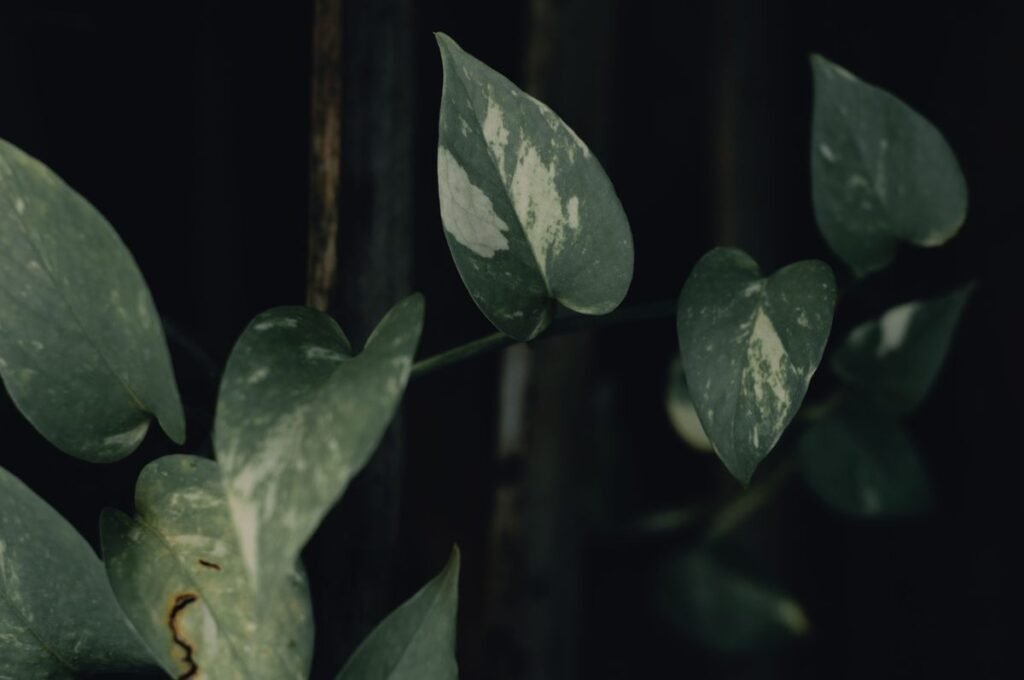
I still remember the morning I found my Pothos covered in what looked like tiny cotton balls tucked into every leaf joint. I’d never seen mealybugs before, and my first instinct was to panic and reach for the strongest bug spray I could find online.
I’m glad I didn’t, because that plant recovered fully with nothing more than rubbing alcohol and a cotton swab.
That experience is basically why this guide exists: pests are common, and they’re rarely fatal. If you catch them early, you rarely need harsh chemicals to deal with them.
Most common indoor plant pests can be managed without immediately reaching for a strong pesticide. The key is correct identification, early detection, isolation, and consistent treatment. Natural and low-impact methods such as washing plants, manually removing insects, using insecticidal soap or horticultural oil, improving watering practices, and using sticky traps can be highly useful when applied correctly.
However, “natural” does not automatically mean harmless or effective. Some popular home remedies can damage leaves, while others have little evidence behind them. Even neem oil, one of the most frequently recommended natural pest treatments, works differently against different pests and must be used properly.
This guide explains how to identify the most common indoor plant pests and manage them naturally with practical, evidence-based methods.
Table of Contents
What Causes Indoor Plant Pest Infestations?
Before jumping into treatment, you need to understand why infestations happen. Indoor plants are more vulnerable to sustained pest outbreaks than outdoor ones because there are no natural predators, no ladybugs, lacewings, or birds, to keep populations in check. Pests typically arrive one of three ways:
Low humidity, dust buildup on leaves, and overwatering (particularly for fungus gnats) all make plants more susceptible. Regularly inspecting plants is the single best form of prevention.
Indoor plant pests usually do not appear because you have done something terribly wrong. They can enter your home through:
- Newly purchased plants from a nursery without being inspected.
- Plants brought indoors from outside.
- Infested potting soil or plant material, especially bagged soil that hasn’t been sterilized, which can harbor fungus gnat eggs.
- Open windows or doors that welcome the insects.
- Cut flowers or outdoor plants
- Pest-infested containers or gardening tools
- Nearby plants that are already infested could cause cross-contamination.
Many infestations begin with a single unnoticed insect or egg.
University extension specialists recommend inspecting new plants carefully and keeping them separate from your existing collection for a period of time before introducing them. This is one of the simplest ways to prevent pests from spreading throughout your indoor garden.
Are unhealthy plants more likely to get pests?
Plant stress can contribute to pest problems, but it is important not to oversimplify this.
Poor light, improper watering, nutrient imbalances, root damage, and unsuitable environmental conditions can weaken a plant and cause symptoms that are sometimes mistaken for pest damage.
In fact, many indoor plant problems are caused by environmental or watering issues rather than insects.
Therefore, before treating your plant, ask:
Is there actually a pest?
Look closely at the leaves, stems, leaf joints, growing points, and soil before choosing a treatment.
7 Common Indoor Plant Pests You Should Know
The following pests are among the most common problems encountered on indoor plants.
| Pest | What it looks like | Common signs | Best low-impact controls |
| Aphids | Small, soft-bodied, pear-shaped insects | Curled or distorted new growth, sticky honeydew | Water spray, manual removal, insecticidal soap |
| Mealybugs | White, cottony insects | White clusters, sticky leaves, weakened growth | Manual removal, alcohol swab, insecticidal soap/oil |
| Spider mites | Extremely tiny mites; sometimes difficult to see | Fine webbing, stippling, yellowing leaves | Thorough washing, insecticidal soap, horticultural oil |
| Scale | Small bumps attached to stems/leaves | Sticky honeydew, yellowing, weakened growth | Manual removal, horticultural oil/soap |
| Thrips | Very small, slender insects | Silvery streaks, distorted leaves/flowers | Washing, sticky traps, insecticidal soap/neem products |
| Whiteflies | Tiny white flying insects | Flies up when plant is disturbed, yellowing leaves | Washing, yellow sticky traps, soap/oil |
| Fungus gnats | Tiny dark flies around soil | Flying adults, larvae in moist potting mix | Allow appropriate drying, sticky traps, Bti |
Treatment effectiveness varies by pest and life stage, which is why identifying the pest before treatment is so important.
1. Aphids
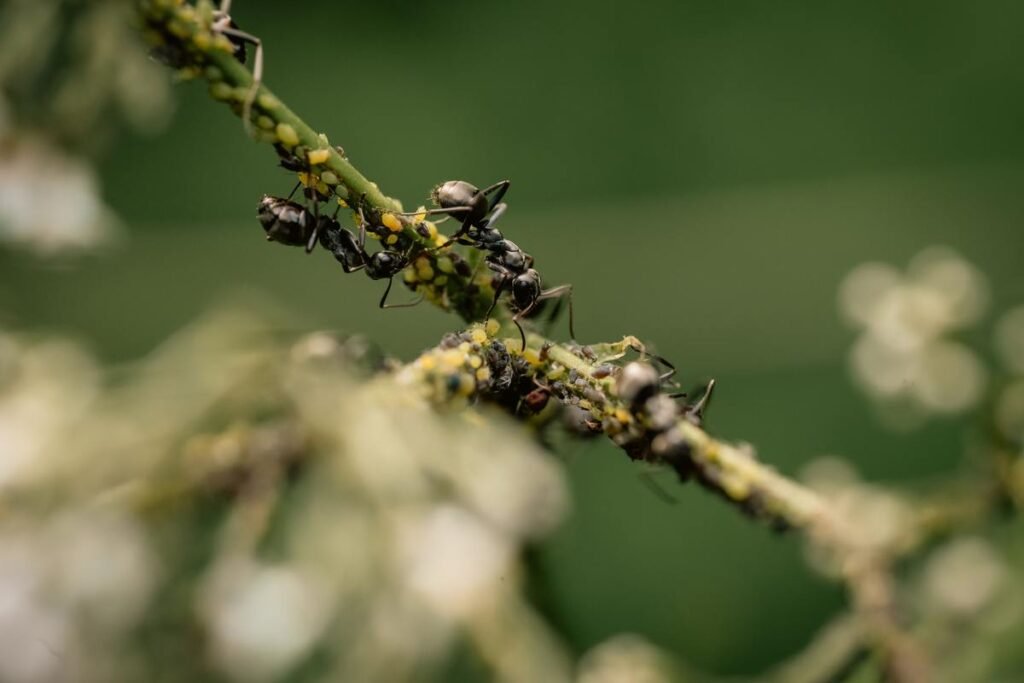
Aphids are small, soft-bodied insects that commonly gather around tender new growth, stems, buds, and the undersides of leaves.
They can be green, black, brown, yellow, pink, or other colors depending on the species.
Signs of aphids
Look for:
- Clusters of tiny insects on new growth
- Curled or distorted young leaves
- Sticky leaves
- Yellowing or weakened growth
- White shed skins
- Ants around the plant
- Black sooty mold developing on honeydew
Aphids feed by sucking plant sap. They can reproduce quickly so that a small infestation can become noticeable surprisingly fast.
How to get rid of aphids naturally
1. Wash them away: A strong spray of plain water can physically dislodge aphids from the plant. Take the plant to a sink, shower, or suitable outdoor location and thoroughly spray the leaves and stems.
Pay particular attention to:
- Leaf undersides
- New growth
- Stems
- Growing points
This is often an excellent first step for a small infestation.
2. Remove them manually: If you only see a few aphids, crush or wipe them away. For a small indoor plant, this can be surprisingly effective.
3. Use insecticidal soap: Insecticidal soap can control aphids when it directly contacts them. It does not provide a long-lasting residual effect, so repeated applications may be necessary.
2. Mealybugs
Mealybugs are among the easiest indoor plant pests to recognize.
Signs of Mealybugs:
They often look like tiny white cotton balls tucked into:
- Leaf joints
- Stem crevices
- New growth
- Undersides of leaves
- Around the base of leaves
They feed on plant sap and can produce honeydew, leaving the plant sticky.
How to get rid of mealybugs naturally
1. Remove individual mealybugs: For a small infestation, manually removing the insects is often the simplest option.
A cotton swab lightly moistened with rubbing alcohol can be used to target individual insects as the alcohol dissolves their waxy coating and kills them on contact. Test the method on a small portion of the plant first because some plants are sensitive to alcohol.
2. Wash the plant: A strong stream of water can dislodge mealybugs.
However, washing alone may not eliminate hidden insects, particularly those tucked into leaf axils or protected areas.
3. Use insecticidal soap or horticultural oil: These products can help control mealybugs when they adequately contact the insects. Repeated treatment may be necessary because some individuals and different life stages may survive the first application.
Important tip
- Do not treat only the visible white patches.
- Inspect the entire plant.
- Mealybugs can hide in places that are easy to overlook, which is one reason infestations can return after apparently successful treatment.
3. Spider Mites
Spider mites are particularly troublesome because they can be difficult to see. They are not actually insects; they are mites related to spiders and ticks. One of the first signs may be damage rather than the pest itself.
Signs of spider mites
Look for:
- Tiny pale dots or stippling on leaves
- Yellowing or bronzing foliage
- Fine webbing
- Weak or declining leaves
- Mites moving along the underside of leaves
Spider mites often become easier to notice when populations increase.
Why do they show up?
Spider mites are technically arachnids, not insects, and they thrive in dry, warm conditions, which is exactly what most centrally heated homes offer in winter.
How to control spider mites naturally
1. Shower the plant: Thoroughly washing the plant with water can physically remove many mites.
Make sure you spray both: Top of leaves + undersides of leaves
The undersides are especially important. Repeated washing can help reduce spider mite populations.
2. Use insecticidal soap: Insecticidal soap can kill mites when it directly contacts them. Because it does not provide long-lasting residual control, repeated applications may be required. Covering leaf undersides thoroughly, you can spray every 5-7 days for 2-3 cycles.
3. Use horticultural oil: Horticultural oils can also suppress spider mites when the spray thoroughly contacts the pest. Always follow the product label and test the plant first because some plants can be sensitive to oils.
4. Scale Insects
Scale insects can look more like small brown, tan, gray, or black bumps than insects.
They attach themselves to plant surfaces and suck plant sap.
Signs of scale
You may notice:
- Small bumps along stems
- Scale attached to leaves
- Yellowing foliage
- Weak growth
- Sticky honeydew
- Sooty mold
How to get rid of scale naturally
Scale is a good example of why physical removal can be valuable.
For a small infestation, carefully remove individual scales with a fingernail, a soft cloth, or a cotton swab.
After removing the visible insects, inspect the plant regularly for newly emerging individuals.
Horticultural oils can also be useful against scale, although effectiveness can depend strongly on the life stage. Oils are generally more effective against exposed or immature stages than heavily protected mature scales.
5. Thrips
Thrips are tiny, slender insects that can be particularly frustrating because they are small, mobile, and capable of spreading from plant to plant.
They feed on plant tissue and can damage leaves and flowers.
Signs of thrips
Watch for:
- Silvery streaks
- Pale or discolored patches
- Distorted new growth
- Damaged flowers
- Tiny dark fecal spots
- Small insects moving rapidly across leaves
Thrips damage occurs when they scrape plant surfaces and feed on the fluids released from the damaged tissue.
How to manage thrips naturally
1. Wash the plant: Thorough washing can remove some insects from the plant.
2. Use sticky traps: Yellow or blue sticky cards can help monitor and capture adult thrips. Sticky traps should be viewed primarily as a monitoring and population-reduction tool, not a magical solution that eliminates every stage of an infestation.
3. Use insecticidal soap or an appropriate plant-based product: Insecticidal soaps and certain neem or plant-oil products can help suppress thrips, but thorough coverage and repeated treatment are generally necessary.
6. Whiteflies
Whiteflies are tiny, pale insects that often fly up in a cloud when an infested plant is disturbed.
They commonly stay on the undersides of leaves.
Signs of whiteflies
You may notice:
- Small white insects flying around the plant
- Adults on leaf undersides
- Yellowing leaves
- Sticky honeydew
- Sooty mold
How to control whiteflies naturally
1. Wash the leaves: A strong water spray can remove some insects.
2. Use yellow sticky traps: Yellow sticky cards can capture adult whiteflies and are particularly useful for monitoring whether the population is increasing or decreasing.
3. Use insecticidal soap or horticultural oil: These can help control exposed whitefly stages when they come into direct contact with the treatment.
However, adults can continue to fly and reproduce, so repeated monitoring is important.
7. Fungus Gnats
Fungus gnats are tiny, dark flies that often appear around indoor plants. Unlike aphids and mealybugs, the adults are usually not the main problem.
The larvae develop in moist organic potting material and feed primarily on fungi and decaying organic matter, although larvae can sometimes damage roots when populations are high.
Why do fungus gnats appear?
The most common reason is consistently moist growing media. This does not mean you should let every indoor plant become bone dry.
Instead, water according to the plant’s actual needs and allow the growing medium to dry appropriately between waterings.
How to get rid of fungus gnats naturally
1. Adjust your watering: Avoid keeping the potting mix constantly wet. Allow the surface or appropriate portion of the growing medium to dry between waterings according to the plant’s needs.
2. Use yellow sticky traps: Place yellow sticky traps near the plant. They capture adult fungus gnats and help you monitor the infestation.
3. Consider Bti for persistent infestations: Bacillus thuringiensis subspecies israelensis (Bti) is a biological control used against fungus gnat larvae. It targets the larval stage rather than the adult flies, so combining it with sticky traps can address different parts of the pest’s life cycle.
The Most Effective Natural Methods for Indoor Plant Pests
You do not necessarily need a complicated collection of pest-control products.
Several basic methods can handle many small infestations.
1. Isolation
As soon as you discover a pest: Move the affected plant away from your other plants.
This should be one of your first steps.
Many infestations become difficult because pests are allowed to move from one plant to another. Extension specialists specifically recommend isolating infested plants.
2. Water
Plain water is surprisingly useful against many soft-bodied pests.
A strong spray can physically dislodge:
- Aphids
- Mealybugs
- Spider mites
- Some whiteflies
- Other small insects
However, water does not necessarily kill every pest or eliminate eggs, protected insects, or hidden populations.
Think of it as physical pest removal, not a one-time cure.
3. Insecticidal Soap
Insecticidal soap is different from ordinary household soap.
Commercial insecticidal soaps generally contain potassium salts of fatty acids and are specifically formulated for pest control. They work primarily through direct contact with susceptible pests.
They can be useful against:
- Aphids
- Spider mites
- Thrips
- Whiteflies
- Mealybugs
- Some scale stages
Why are repeated treatments important?
Insecticidal soap generally has little or no residual activity after it dries. Therefore, a single spray may not solve the entire infestation. Follow the product label for how frequently to repeat treatment.
Do not assume dish soap is the same thing. This is an important myth to correct.
Dishwashing detergent is not automatically a safe substitute for insecticidal soap. Household detergents can contain ingredients that damage plant tissue.
University of Minnesota Extension specifically advises against homemade soap products because they can burn plants.
4. Horticultural Oil
Horticultural oils are refined oils formulated for pest management. They work primarily by physically covering susceptible pests and interfering with their ability to survive.
They can be useful against pests such as:
- Spider mites
- Aphids
- Scale
- Whiteflies
- Some other soft-bodied insects
Coverage matters. If the spray does not reach the pest, the treatment may not work effectively.
Important safety point
- More oil does not mean better pest control.
- Always follow the product label.
- Some plants are sensitive to oils, and improper application can cause plant injury.
5. Neem Oil: Useful, But Not a Miracle Cure
Neem oil is one of the most popular natural pest-control products for indoor plant s. But there is a lot of misinformation surrounding it.
Neem products are not a universal cure for every insect. Different neem formulations can work differently, and their effectiveness varies by pest.
Neem-derived compounds can disrupt insect growth and feeding, while neem oil itself can also function as a plant-derived horticultural oil.
University of Minnesota Extension lists neem as useful against pests including whiteflies, thrips, and aphids, but repeated applications may be needed.
Should you use neem oil?
It can be a useful option. But don’t treat it as: “One spray and the pests are gone.” Instead, think of neem as one tool within an overall pest-management strategy. Always check the product label for the specific plant and pest, and test a small area first if the product permits.
6. Sticky Traps
Sticky traps are particularly useful for flying pests.
They can help detect and reduce:
- Fungus gnats
- Whiteflies
- Thrips
They are especially valuable because they provide information. If your trap suddenly catches many more insects, you know that the population may be increasing. This makes sticky traps a monitoring tool and a control tool.
7. Manual Removal
Never underestimate simply removing the pests.
Manual removal works particularly well when the infestation is caught early.
You can:
- Wipe scale from stems
- Remove mealybugs
- Crush aphids
- Prune heavily infested leaves
- Remove badly affected plant parts
For a single plant with a handful of pests, physical removal can be more sensible than treating the entire plant with multiple products.
What About Rubbing Alcohol?
Rubbing alcohol is commonly recommended online for mealybugs and scale.
It can be useful for targeted treatment of individual insects, but it should not be treated as a universal plant spray. Alcohol can damage plant tissue if applied too heavily or to sensitive plants.
If you use it:
- Target the pest rather than soaking the entire plant.
- Test a small area first.
- Wait and observe for damage.
- Avoid treating large areas unnecessarily.
For widespread infestations, a product specifically formulated for plant use may be a safer and more consistent option.
Natural Pest Control Myths You Should Stop Believing
The internet is full of indoor plant pest remedies. Some have a reasonable basis, while others are exaggerated.
Myth 1: “Natural means completely safe.”
False.
Natural substances can still damage plants or harm non-target organisms.
Neem oil, horticultural oils, soaps, and other botanical products still need to be used according to their labels.
Myth 2: “Dish soap and insecticidal soap are the same.”
False.
Insecticidal soap is formulated specifically for pest control. Household detergents can damage plant tissue and are not automatically suitable for spraying plants.
Myth 3: “Neem oil kills every indoor plant pest.”
False.
It is a tool, not a universal cure. Neem can help manage certain pests, but effectiveness varies by pest, formulation, life stage, and application.
Myth 4: “One treatment is enough.”
Usually false.
Many treatments work only when they directly contact the pest. Eggs, hidden insects, and newly emerged individuals can survive the first treatment. That is why monitoring and repeated treatments are often necessary.
Myth 5: “Cinnamon will eliminate fungus gnats.”
Not a reliable control strategy.
Cinnamon is often promoted online as a fungus-gnat solution, but it should not replace proven approaches such as appropriate watering, sticky traps, and Bti for larvae.
Myth 6: “If I see a few bugs, I need to throw away the plant.”
Not necessarily.
Small infestations can often be managed. However, if a plant is severely infested, badly damaged, or difficult to treat without risking your other plants, discarding it can sometimes be the most practical option. Extension guidance recognizes disposal as a reasonable management choice for heavily infested plants.
A Simple Natural Pest-Control Routine
If you discover pests on an indoor plant, don’t panic.
Use this sequence:
Step 1: Identify the pest
Don’t spray first and identify later.
Look closely at:
- Leaves
- Leaf undersides
- Stems
- Leaf joints
- New growth
- Soil surface
Take a photograph if you cannot identify the insect.
Step 2: Isolate the plant
Move it away from your other indoor plants.
Step 3: Remove heavily damaged material
Prune leaves or stems that are severely infested when appropriate for the plant.
Step 4: Wash the plant
Use water to remove as many pests as possible physically.
Step 5: Choose the appropriate treatment
Depending on the pest, this could include:
- Manual removal
- Insecticidal soap
- Horticultural oil
- Neem-based product
- Sticky traps
- Bti for fungus gnat larvae
Step 6: Treat thoroughly
Do not spray only the most obvious part of the plant. Check leaf undersides, stems, and protected areas.
Step 7: Repeat according to the product instructions
Do not assume that one application eliminates the infestation.
Step 8: Monitor
Inspect the plant regularly. Look for both: new pests + new plant damage
Step 9: Reassess
If the infestation continues despite appropriate treatment, identify whether:
- The pest was misidentified
- Some areas were missed
- Treatment frequency was insufficient
- Nearby plants are also infested
- The plant is too severely affected to save
How to Prevent Indoor Plant Pest Infestations
Prevention is usually easier than dealing with a major infestation.
Inspect plants before buying them
Before bringing a new plant home, inspect:
- Leaf undersides
- Stems
- Growing points
- Soil surface
- Leaf joints
- New growth
Look for insects, eggs, webbing, sticky residue, discoloration, or unusual damage.
Quarantine new plants
Keep newly purchased plants separate from your existing collection for 1-2 weeks.
This gives you time to detect pests before they spread.
University extension recommendations commonly emphasize quarantining new plants because many indoor pest infestations are introduced through newly purchased or moved plants.
Inspect your plants regularly
You don’t need to conduct a full pest inspection every day. Make it part of your normal watering routine. Check the plant rather than simply pouring water into the pot.
- Look underneath the leaves.
- Look between stems and leaves.
- Look at new growth.
Early detection can make pest management dramatically easier.
Avoid chronic overwatering
Overwatering does not directly cause every pest problem, but constantly wet growing media can encourage fungus gnats and other moisture-associated problems.
Water according to the specific plant’s requirements rather than following a rigid calendar.
Keep plants clean
Dust can accumulate on the leaves of indoor plants. Occasional cleaning can make it easier to notice pests and abnormalities. It can also physically remove some pests.
When Should You Stop Trying to Save a Plant?
Not every plant needs to be rescued at all costs.
Although it may hurt, consider discarding a plant when:
- The infestation is severe.
- The plant is already badly damaged.
- Multiple treatment attempts have failed.
- The pest has spread extensively.
- Keeping the plant puts your entire collection at risk.
- The plant is inexpensive and difficult to treat effectively.
It can feel disappointing to throw away a plant, but sometimes removing one heavily infested plant prevents a much larger problem.
The Best Approach: Integrated Pest Management
The most important lesson is that successful natural pest control is rarely about finding one magical ingredient.
A better approach is Integrated Pest Management (IPM).
For indoor plants, this means combining several strategies:
Prevent → Inspect → Identify → Isolate → Physically remove → Treat → Monitor → Repeat if necessary
This approach reduces unnecessary pesticide use while focusing treatment where it is actually needed. Extension specialists recommend identification, monitoring, sanitation, physical controls, environmental management, and appropriate treatments as parts of effective indoor plant pest management.
Quick Indoor Plant Pest Treatment Chart
| If you see… | It may be… | Start with… |
| Tiny insects clustered on new growth | Aphids | Water spray + manual removal |
| White cottony patches | Mealybugs | Manual removal + insecticidal soap/oil |
| Fine webbing and stippled leaves | Spider mites | Thorough washing + insecticidal soap/oil |
| Brown bumps attached to stems | Scale | Manual removal + horticultural oil |
| Silvery streaks and distorted growth | Thrips | Washing + sticky traps + appropriate treatment |
| Tiny white flies | Whiteflies | Washing + yellow sticky traps |
| Small black flies around soil | Fungus gnats | Correct watering + sticky traps + Bti |
Final Thoughts
Finding pests on your indoor plants can be alarming, but you do not necessarily need to reach for the strongest pesticide or throw the plant away.
The most reliable strategy is much simpler: identify the pest, isolate the plant, remove as many pests as possible, choose an appropriate low-impact treatment, and keep monitoring.
Water, manual removal, insecticidal soap, horticultural oils, sticky traps, and biological controls can all play useful roles. But none should be treated as a magical cure.
Most importantly, don’t let the word “natural” replace good pest-management practices. A homemade remedy can still injure your plant, while a properly labeled insecticidal soap or horticultural oil can sometimes be a more predictable and responsible choice.
Your goal isn’t to kill every tiny organism you see.
Your goal is to keep pest populations below the level at which they seriously damage your plants while using the least-disruptive effective method.
That is what sustainable indoor plant pest management is really about.
Frequently Asked Questions (FAQs)
1. What is the best natural way to get rid of indoor plant pests?
There is no single best method for every pest. Start by identifying the pest, isolating the plant, and physically removing as many pests as possible. Water, insecticidal soap, horticultural oils, sticky traps, and biological controls can then be selected according to the pest involved.
2. Can I use dish soap to kill indoor plant pests?
It is better not to assume that ordinary dish soap is safe for plants. Commercial insecticidal soaps are specifically formulated for pest control, while household detergents can cause plant injury.
3. Does neem oil really work on indoor plant pests?
Yes, neem-based products can help manage certain indoor plant pests, but they are not effective against every pest in the same way. Neem-derived compounds can interfere with feeding and insect development, while neem oil can also act as a horticultural oil. Follow the product label and expect that repeated treatment may be necessary.
4. How often should I treat a plant for pests?
There is no universal schedule. Treatment frequency depends on the pest and the product. Because many contact treatments work only when they directly reach the pest, repeat applications are often needed. Always follow the product label rather than creating a fixed schedule yourself.
5. Do I need to repot my plant if it has pests?
Not always. Repotting is mainly necessary for soil-dwelling pests like fungus gnat larvae or root mealybugs. For leaf and stem pests like aphids, spider mites, or scale, treating the foliage is usually enough.
6. Why do my indoor plants keep getting pests?
Pests can be repeatedly introduced through new plants, outdoor plants brought inside, contaminated materials, or nearby infested plants. Persistent problems can also occur when hidden pest populations or eggs survive treatment. Regular inspection and quarantine of new plants can reduce the risk.
7. Are fungus gnats harmful to indoor plants?
Adult fungus gnats are primarily a nuisance, while their larvae live in moist growing media and feed mainly on fungi and decaying organic material. Large larval populations can cause problems, particularly around roots. Managing moisture and using sticky traps and, when appropriate, Bti can help control them.
8. Can I get rid of indoor plant pests without pesticides?
Many small infestations can be managed with nonchemical methods such as isolation, washing, manual removal, pruning, improved watering practices, and sticky traps. Some infestations may require a labeled insecticidal soap, horticultural oil, or another appropriate treatment if nonchemical methods are insufficient.
9. Should I throw away a plant with pests?
Not automatically. Small and moderate infestations are often manageable. However, severely infested plants that are badly damaged or difficult to treat may be better discarded to protect the rest of your plant collection.
10. How long does it take to get rid of indoor plant pests naturally?
Most infestations take 2–4 weeks to fully clear with consistent natural treatment, since you need to break the pest’s egg-larva-adult life cycle rather than just killing the visible adults in a single application


One comment on “7 Common Indoor Plant Pests and How to Get Rid of Them Naturally”