Indoor plants are quite different from outdoor ones. For outdoor plants, there may be natural rain to reset a mistake, wind to dry the soil and sunlight to regulate the growth. But for inside plants, there are none of those. The only thing that decides your indoor plants’ wellbeing is watering.
Before you learn more about plants, you may think watering indoor plants on a fixed schedule is best. But when your plants die, you’ll realize your mistakes. But it’ll be too late by then.
I also killed my first ever indoor plants by overwatering. It was a Peace Lily. I was so excited to make it beautiful on my own. I watered it daily and even when the leaves turned yellow after the overwatering, I still watered it. Then, my Peace Lily gave up at the end.
That was when I was a beginner. As a beginner, a simple thought like watering indoor plants daily will make it ultimately healthy is common. You will grow with your mistakes as your plants grow up.
No matter if you are a beginner or a professional, you’re welcome to this blog, a Guide to watering your indoor plants, where you’ll learn how to water your plants properly, check your soil moisture, adjust your watering according to seasons or plant type.
Table of Contents
Why Proper Watering Matters?
As I mentioned above, watering is what matters the most, when it comes to indoor plants. Your plant roots need water and oxygen. But it needs a considerate amount. Neither too much nor too little.
Your plant roots need to breathe otherwise it will start to rot. So, Overwatering is not a choice to begin with. If the soils are constantly wet, it will start rotting within 3 days.
And that doesn’t mean you have to water it once a month. If the soil becomes too dry, you need to water your plants immediately before it’s too late. It is because the more dried out the soil becomes, the harder it will be for a plant to absorb enough nutrients.
While watering your indoor plants, things that you need to focus on are neither to keep the soil too dry nor too wet. The only goal is to keep the soil moist when needed, but not constantly wet.
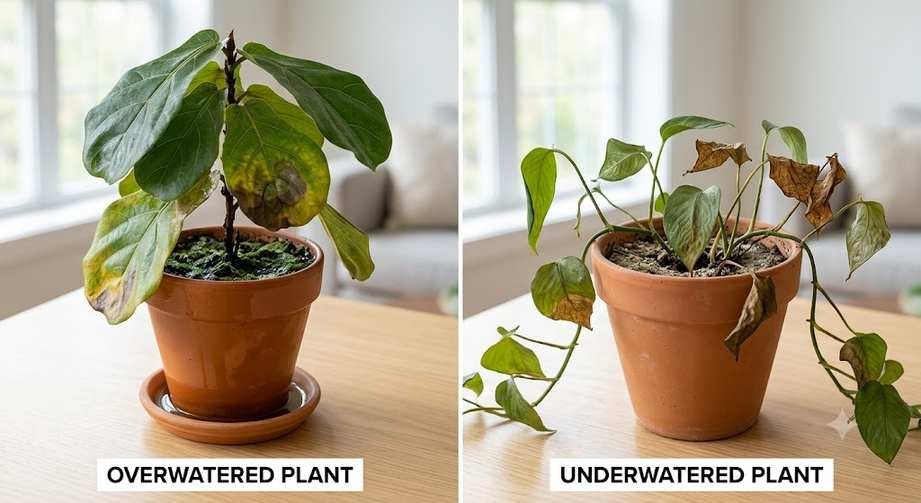
Here’s how you find out if you are overwatering or underwatering your plants:
Signs of Overwatering
The most common cause of indoor plant death is overwatering. The following are the signs that you’re overwatering your plants:
- The leaves of the plants are turning yellow.
- The stems of the plants are being soft or mushy.
- If the soil of your plant stays wet for many days.
- There is a white mold or fungus on the soil surface.
- A sour or rotten smell from the pot.
If you notice one of these signs, dry the soil and use the pots that have drainage holes on it.
Signs of Underwatering
When your indoor plants are not watered at time, then it shows much faster. A thirsty plant is easy to look out for. The below mentioned are the signs that your plants are underwatered:
- The leaf edges are turning brown and are dry and crispy.
- Your always fresh leaves are drooping or wilting.
- The stems of your plants are also drooping and are not growing properly.
- The soils are shrinking away from the sides of the pot.
- The leaves of your plants are curling inwards.
If you catch these early signs quickly, then you should water your plants quickly to recover it as soon as possible.
The Right Way to Watering Indoor Plants
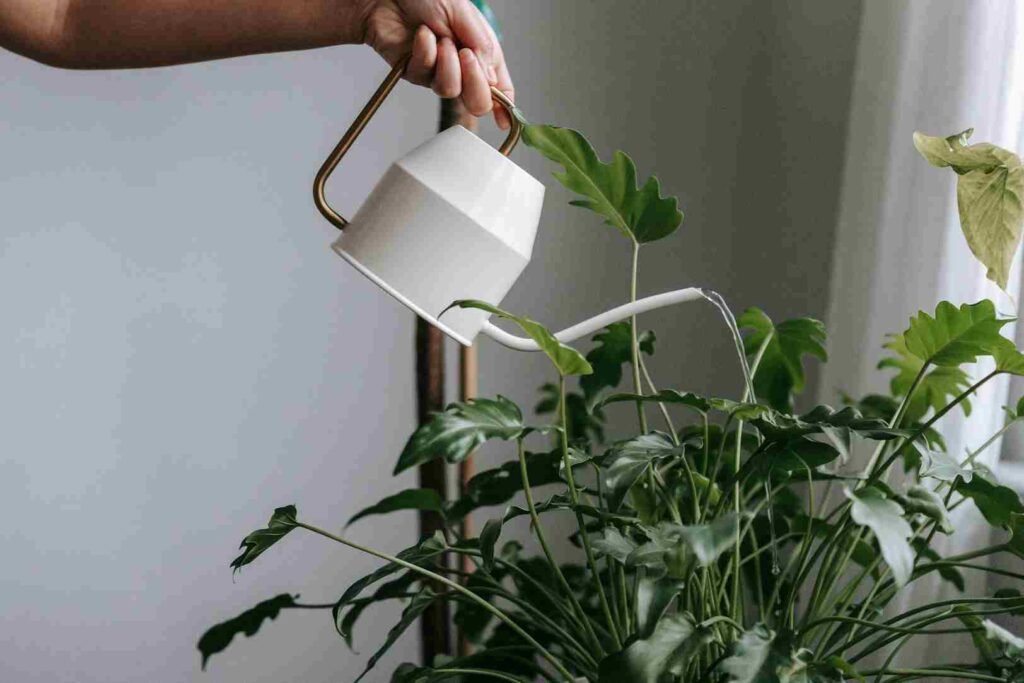
Although there may not be a similar routine to water the indoor plants, there is always a right way to watering indoor plants.
Here are some steps that you can follow to water your indoor plants in a right way and maintain the healthy roots:
- Water slowly and evenly around the soil surface.
- Continue watering until water drains from the bottom of the pot.
- Let excess water drain completely.
- Empty the saucer after a few minutes so the plant is not sitting in water.
Deep watering encourages roots to grow downward and makes plants stronger.
How Often Should You Water Indoor Plants?
Each plant has different characteristics and each behaves differently. Every plant needs their own schedule to be watered. Some need regular watering and some don’t.
Instead of watering indoor plants on a fixed schedule, check the soil every few days and water only when the appropriate depth feels dry. This simple habit keeps roots healthy and helps prevent both overwatering and underwatering.
There is no same watering schedule for every indoor plant. Some like moist soil and some may prefer being dry in between waterings. There’s no single number that works for every plant.
There are many factors to be considered while watering indoor plants like plant type, soil type, pot size, light etc.
The main factors to be considered while watering indoor plants are:
- Plant type: As said before, every plant has different features and each needs their own schedule to be watered. Succulents and Cacti might need water every 2–3 weeks, while tropical plants like Pothos or Peace lilies often want it every 5–7 days. But Snake plants need less water than Peace lilies. Ferns tend to like consistently moist soil.
- Light: Sunlight also plays a huge role in a plant’s well-being. A plant in a bright, sunny window is different from the same plant in a dim corner. It may dry out and sometimes twice as fast than the one in the dark place. So it needs a watering schedule as per the light.
- Season: Your indoor plants watering, also relies on the season. During fall or winter, most indoor plants slow down in absorbing the water. So you might need to water it less than in the summer.
- Pot size: The plants that are in small pots dry out faster than the larger ones. SO watering in the smaller plants should be looked at more often than the other. Terracotta pots are good and even better for the plants than the plastic or ceramic pots.
- Soil type: Well-draining soil dries out quicker than dense soil. So you also need to check on the soil type to maintain the watering schedule of the plants.
- Room conditions: Watering schedule also depends on the room conditions. IF your pants are a neat heating vent or radiator, then the soils will dry out more quickly. Warm rooms increase the loss of water in plants. So, if our plants are placed in warm rooms or the place with dry indoor air then you need to watch out for it, in case the dryness kills your plant. Plants will need more water if there is such a condition.
As a general rule, you can check the soil every few days rather than watering indoor plants automatically whenever you feel right.
3 Simple Ways to Check the Soil Before Watering Indoor Plants
It is a universal rule to check the soil of your plants before watering them. There are different ways that can be used to check the soil before watering.
Here are 3 common and simple ways to check if your plants need to be watered or not:
1. The Finger Test
It is one of the most simple and common tests to check the soil’s condition before watering. Here’s what you do:
Put your finger about 1–2 inches (2.5–5 cm) into the soil and see if it is dry or moist.
- Dry: If it was hard to put your finger into the soil then the soil is hard, which is due to dryness. You need to water the plant right then and there if it is as such.
- Slightly moist: If it was neither hard nor easy to put the finger into the soil then it is slightly moist. You can wait a day or two, come to check again and then water it.
- Wet: If your finger went very easily into the soil then it is wet. So do not water your plants in that condition. Let it dry out for some days then only water it.
2. The Wooden Stick Test
This test is similar to that of the finger test. Here instead of your finger you use the wooden stick.
You can push a wooden chopstick or skewer into the soil and pull it out. Then look at the soil in the wooden stick or the skewer.
- If there is nothing attached in the stick, and have clean and dry soil then water is needed. In this condition the stick is also hard to push because of the hardened soil.
- If the stick is damp with soil attached then you have to wait and not water it until it’s dry. In this condition, the stick can be pushed in easily.
Make sure to use a clean stick. And I think wooden sticks would be a better option.
3. Lift the Pot
You can also check the soil before watering by lifting the pot. A dry pot feels much lighter than a freshly watered one.
At the beginning, you may feel that the pots are similar in weight but with practice, this will be an easy way to judge moisture.And based on your judgement, you can choose your decisions wisely, either to water or not.
What is the Best Water for Indoor Plants?
Although we use water that is available within us, there are some of the best waters for your indoor plants too. Some of them are listed below:
1. Tap Water
Most of the indoor plants can grow well with tap water. It is one of the best waters to grow your plants in.
If your tap water has chlorine, let it sit in an open container for 24 hours before using it. As chlorine water is harmful for your plants. It may cause leaf damage, root stress and microbe loss.
2. Rainwater or Filtered Water
Rainwater or Filtered water are one of the excellent options for sensitive plants such as calatheas and some ferns.
Avoid using softened water, which may contain excess salts. Using softened water can lead to dehydration of your plants along with poor soil health.
3. Distilled water or RO (Reverse Osmosis) Water
Distilled water and Reverse Osmosis (RO) water are ultra-pure water that has no minerals, chemicals and impurities. They have a neutral pH, providing a completely blank slate for plant soil.
These types of water prevent toxic buildup and stop brown, crispy leaf tips on hyper-sensitive plants like Calatheas, Prayer Plants, and Orchids. But since they are deprived of all natural nutrients, they can starve your pants over time.
So to fix that you may need to add a high-quality liquid fertilizer to replace the missing minerals.
Seasonal Watering Tips
Your plants grow according to the season. In spring, your plant grows flowers, in winter they don’t grow any, in fall their leaves may fall and so on.
Seasonal watering indoor plants requires adjusting your schedule for changing weather, focusing on spring moisture, deep summer hydration, tapering fall use, and warm-winter checks.
Here are seasonal watering tips that you can follow to water your plants:
1. Spring/summer (Active growth)
During Spring and Summer, plants grow actively. In these moments, plants drink more water. Therefore, you should check the soil of your plants more often.
And if the room is warm then you need to water the plants more frequently.
Here are the important things that you should focus on:
- Check soil often: Plants grow fast now and drink much more water.
- Water thoroughly: Pour until water runs out the bottom drainage holes.
- Never let pots sit in water: Empty the saucer after 15 minutes to prevent root rot.
2. Fall/ Winter (Dormancy)
During Fall and Winter, plant growth slows down. So, you should water your plants less, often by half or more. It is because the soil dries out slowly.
At this moment, you should avoid keeping your soil constantly wet. Many plants need 30–50% less water in winter.
Here are the important things that you should focus on during Fall/Winter:
- Cut watering in half: Plants rest during dark months and dry out slowly.
- Test deep soil: Push your finger 2 inches down; only water if it feels dry.
- Boost the humidity: Indoor heaters dry the air, so mist leaves or use a pebble tray.
3. Heaters and AC
Heaters and AC are modern mechanical climate control equipment that are available in every household. These equipment dry out indoor air and soil faster than you expect. So you need to check your plants more frequently when they’re running.
Quick Watering Guide for Popular Indoor Plants
If you want simple watering indoor plants guide, for some of the popular indoor plant, then here is the table on a quick watering guide for popular indoor plants:
| Plants | When to Water? |
| Pothos | Top 1-2 inch dry |
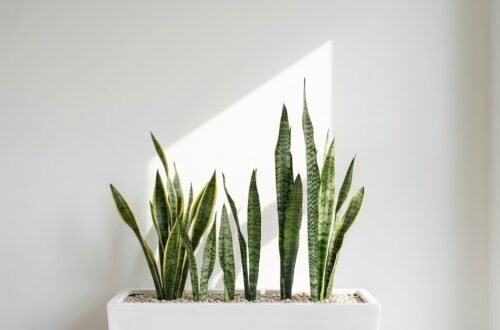
| Snake Plant | Soil mostly dry |
| Peace Lily | Top inch slightly dry |
| Spider Plant | Top 1 Inch dry |
| Monstera | Top 2-4 inch dry |
8 Common Mistakes to Avoid While Watering Indoor Plants
There are times when many common mistakes are done unknowingly while watering indoor plants. Here are 8 common mistakes while watering indoor plants that you can avoid:
- Watering on a strict calendar instead of checking soil first.
- Giving only a small splash of water that can lead to weak roots and dehydration of your plants.
- Watering the leaves instead of the soil could encourage fungal issues on many plants.
- Leaving water in the saucer, which can cause root rot, stunted growth and yellow leaves.
- Using pots without drainage holes, this leads to water trapping and suffocation of roots.
- Ignoring seasonal changes and watering at the same pace every season.
- Ignoring pot material is also a common mistake. Terracotta pots dry out faster than plastic or ceramic.
- Cold water straight from the tap should also be avoided because room temperature is gentler on roots and cold water is not. It could lead to damaging the plant’s well-being.
Final Thoughts
When you finally learn to stop watering indoor plants on a fixed schedule and start checking soil moisture, you’ll avoid most common plant problems and enjoy healthier, happier indoor plants.
I am sure you will learn something about watering at the end of this blog. The secret to watering indoor plants correctly is simple:
- Check the soil first
- Water deeply
- Let excess water drain
- Adjust watering with the season
- Watch your plant’s leaves and soil for clues
- Don’t just follow the same schedule blindly.
Looking back, I no longer see my first Peace Lily as a plant that I failed to keep alive. Instead, I see it as the plant that taught me the most valuable lesson about plant care. And that is, “Healthy plants don’t need more water, they need the right care at the right time.”
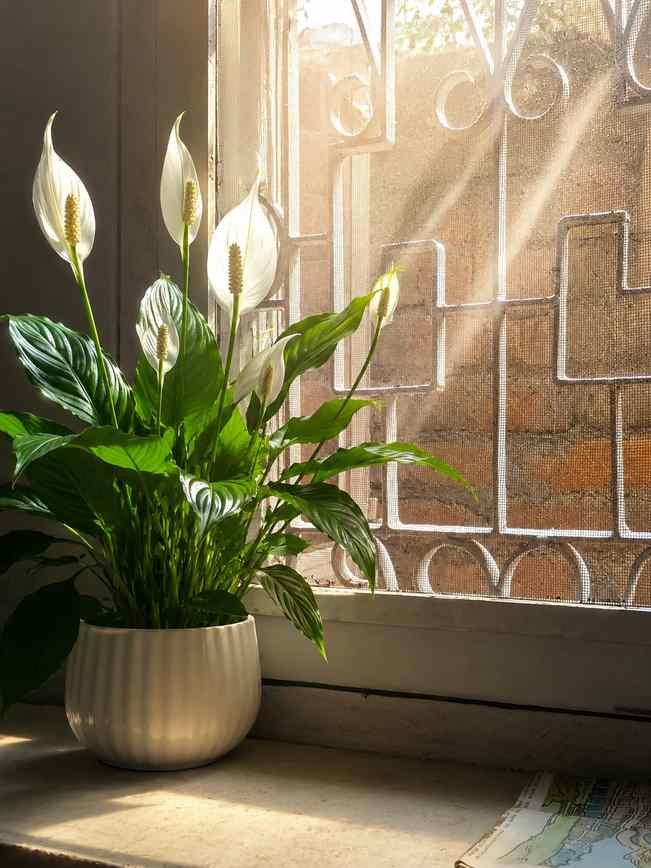
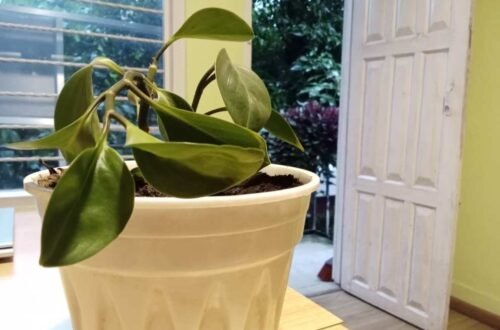
Here’s the latest picture of my Peace Lily in the morning glow.
Every indoor plant is different and needs different care. Some plants drink more while some drink less. But all of them tell you what they need, if you learn to observe them properly. Rather than watering indoor plants on a fixed schedule, take a few moments to check the soil, notice the leaves, and understand your plant’s rhythm.
Becoming a good plant parent isn’t about never making mistakes. It’s about learning from those mistakes and growing alongside your plants.
Happy growing up! 🌿
Frequently Asked Questions (FAQs)
1. How often should I water indoor plants?
There isn’t one watering schedule that works for every indoor plant. Most plants should only be watered when the top 1–2 inches of soil feel dry.
Many factors like the plant type, sunlight, pot size, humidity, and season all affect how quickly the soil dries. Instead of watering on a fixed schedule, check the soil every few days and water only when needed.
2. How do I know when my indoor plant needs water?
The easiest way to tell if your indoor plant needs water is to check the soil. Push your finger about 1–2 inches into the soil. If it feels dry, it’s time to water. If it still feels moist, wait another day or two.
You can also look for drooping leaves or a lighter pot, which often means the plant is thirsty.
3. Am I overwatering or underwatering my plant?
Overwatered plants usually have yellow leaves, soft stems, wet soil, or a sour smell coming from the pot.
Underwatered plants often have dry, crispy leaf edges, drooping leaves, curled foliage, and soil that pulls away from the sides of the pot.
Checking the soil before watering is the best way to prevent both problems.
4. Can an overwatered plant recover?
Yes, an overwatered plant can recover if you act quickly. Stop watering indoor plants until the soil has dried out, remove any standing water from the saucer, and make sure the pot has drainage holes.
If the roots have started to rot, trim away the damaged roots and repot the plant in fresh, well-draining soil. Healthy roots give the plant the best chance to recover.
5. Why are my indoor plant leaves turning yellow?
Yellow leaves are most commonly caused by overwatering, but they can also result from underwatering, poor drainage, low light, or nutrient deficiencies.
Check the soil first. If it stays wet for several days, your plant is likely receiving too much water. Adjust your watering routine based on the soil’s moisture. And I repeat, Don’t follow a fixed schedule.
6. What is the best way to water indoor plants?
The best way to water indoor plants is to water slowly and evenly around the base of the plant until water drains from the bottom of the pot. Let the excess water drain completely, then empty the saucer so the roots don’t sit in water.
This method encourages deep root growth and helps prevent root rot.
7. Should I water my indoor plants on a schedule?
No, you should not. Watering on a fixed schedule can lead to overwatering or underwatering because every plant and home environment is different.
Instead, check the soil before watering. This simple habit helps keep your plants healthy and prevents one of the most common mistakes beginners make.
8. What is root rot, and how can I prevent it?
Root rot is a condition where plant roots begin to decay because they stay in wet soil for too long. It is usually caused by overwatering or poor drainage, which prevents the roots from getting enough oxygen.
To prevent root rot, always use a pot with drainage holes, water only when the soil needs it, and never let your plant sit in standing water. Healthy roots are firm and white, while rotting roots are soft, brown, or black and often have a foul smell.
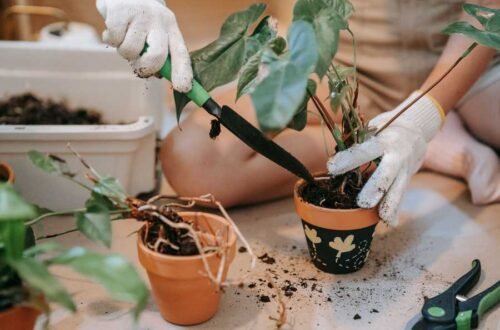
9. Should I water indoor plants immediately after repotting?
Yes, but only once. Water thoroughly after repotting to help settle the soil around the roots, then allow the soil to dry according to the plant’s normal watering needs.

3 Comments on “7 Things to Learn About Watering Indoor Plants Correctly ”