I once owned a money plant, which was growing beautifully. It was such a beautiful green, but later the leaves started turning yellow.
At first, I was confused about why this was happening. But later I found out that I had overwatered my plant. When it was in potted soil, I kept on watering my money plant and spoiled it. And again, in the glass of water, I didn’t change the water when necessary, I just kept on adding instead. This also spoiled my plant.
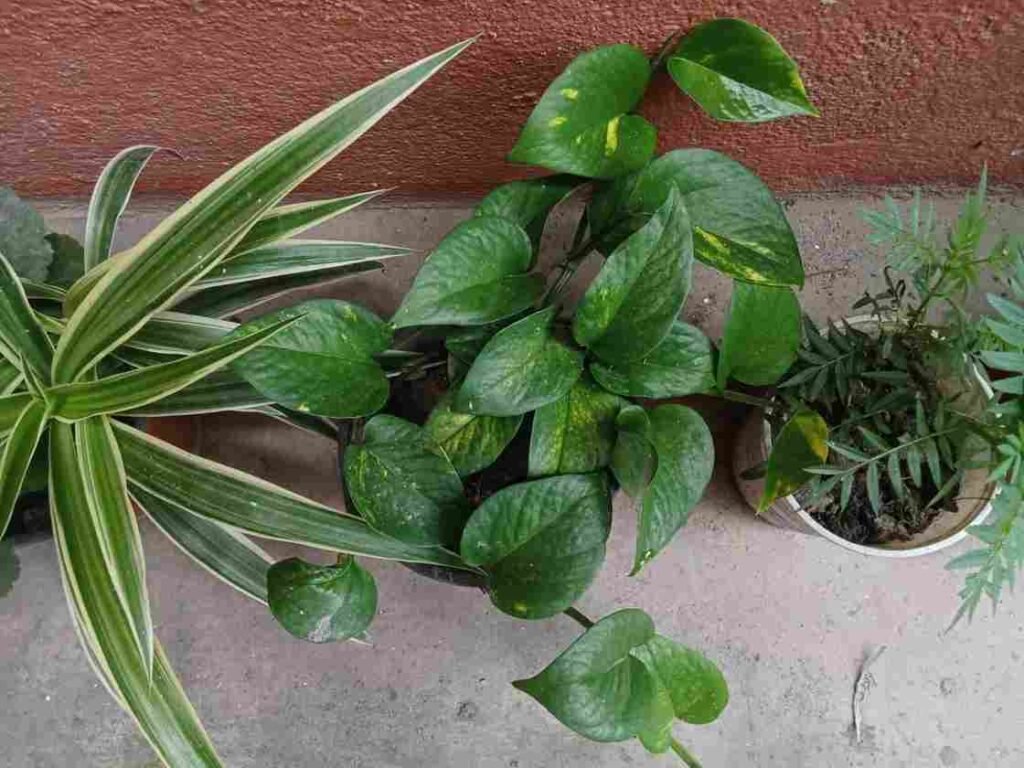
Houseplant leaves turning yellow is one of the most common and most confusing houseplant problems. The tricky part is figuring out why the leaves are turning yellow.
It is because dozens of different issues cause yellow leaves. And to figure out what exactly is causing the issues, you need to find out the pattern of yellowing (which leaves, how fast, with what other symptoms). This tells you which one of the issues you’re dealing with.
Table of Contents
Houseplant leaves turn yellow, mainly because of one of six categories: watering problems, light issues, nutrient deficiencies, environmental stress, pests & disease, or natural aging.
This guide breaks down all 15 causes, how to tell them apart, and what to do about each one.
A. Watering Issues
Watering issues are one of the main reasons why the leaves may turn yellow. You may have overwatered or underwatered, or followed the same routine everyday, your leaves turn ing yellow. If a watering technique is not suited for your plants, then as a result, its leaves may turn yellow, or the roots may also be damaged.
Here are 4 water-related issues that might have caused your plant leaves turning yellow:
1. Overwatering
It occurs when you’re watering your plants too much.
Symptoms:
- Lower/older leaves turn yellow first,
- Soft or mushy leaves that feel like a wet sponge, which look tearable and droopy.
- Sometimes with a slight smell from the soil.
Why it happens: Oxygen is important to plants as much as it is to humans. If you overwater your plants, the soil becomes waterlogged. Waterlogged soil suffocates roots, cutting off oxygen and eventually causing root rot.
How to Fix:
- Let the soil dry out about the top 2-3 inches of your plant before watering again.
- Make sure the pots’ drainage holes are unblocked.
- Empty the saucers after watering.
- If the root rot has started, you should remove the damaged part.
2. Underwatering
It occurs when your plant isn’t watered to its needs.
Symptom:
- Leaves turn yellow, then crispy/brown at the edges or tips.
- Soil pulls away from the pot sides.
- Wilting leaves that have already lost their water pressure.
Why it happens: The foliage of plant leaves needs water to maintain structural firmness, drive the food-making process, and also to cool the plant. And the plant can’t take up enough water to support all its foliage if the soil is too dry or the plant is under-watered. So it sheds leaves to conserve resources, and all the older leaves turn yellow, dry, and fall.
Fix:
- Water thoroughly until it drains from the bottom,
- Check soil moisture weekly instead of watering on a fixed schedule. As the seasons change, your watering schedule also needs to change.
3. Inconsistent Watering Schedule
If you have an unstable watering schedule, like either watering for a long time or keeping it dry for a long time and vice versa.
Symptoms:
- Random yellow leaves scattered across the plant, not concentrated in one area.
- Leaves dropping unexpectedly.
- Slowed-down growth.
Why it happens: The delicate root hairs might be damaged because of an inconsistent watering schedule. This can prevent proper oxygen intake and disrupt water balance, along with proper root growth. Alternating between too wet and too dry stresses the root system repeatedly.
Fix:
- Water your plants based on soil moisture and also the season.
- Check the soil moisture through some tests (finger test or moisture meter), not a fixed daily routine.
4. Poor Drainage / Waterlogged Roots
Waterlogged roots could also be the reason for your plants’ leaves turning yellow.
Symptom: Similar to overwatering, but persists even when you’re watering “correctly.”
- There is wet soil despite infrequent watering.
- Slow growth due to lack of oxygen.
Why it happens: Pots without drainage holes, or soil that’s too dense, trap water at the bottom regardless of how carefully you water.
Fix:
- Repot into a container with drainage holes and a well-draining mix
- Add perlite or orchid bark if needed, as they prevent soil from packing together and create space for air and water.
If you don’t have perlite or orchid bark, then you can use crushed charcoal and rice hulls instead of perlite, and chopped straw, small gravel, and chunky pieces of coconut husk for orchid bark.
B. Light Problems
Light plays a vital role in photosynthesis, converting carbon dioxide and water into glucose and oxygen. Without light, plants cannot make their food as they won’t be able to trigger the chemical reaction.
Here is how light issues can cause plant leaves to turn yellow:
5. Too Little Light
If your plants are getting too little light, then there is a high chance of leaves turning yellow.
Symptoms:
- Leaves become pale and yellow gradually.
- Leggy stems as the light starvation triggers the survival mechanism, etiolation.
- Small new leaves that are light green or yellow.
Etiolation occurs when a plant is starved of light for too long. When the survival mechanism turns on, the tip of the plant is flooded with growth hormone to elongate the plant cells as soon as possible. Because of that, leaf development and stem thickness are sacrificed, leading to leggy growth of the plant, stretching upward, searching for the light.
Why it happens: Without enough light, the plant can’t produce enough chlorophyll to sustain all its leaves. As said above, light starvation cannot lead to photosynthesis (the process of creating food).
Fix: Move to a brighter spot with indirect light for most houseplants or supplement with a grow light if natural light is limited.
6. Too Much Direct Light
Your plant leaves also get yellow if there is too much light in the room.
Symptom: Yellowing with bleached or scorched-looking patches, usually on the side facing the window.
- Yellow patches
- Bleached leaves
- Brown, scorched spots
Why it happens: Direct, intense sun can break down chlorophyll faster than the plant can replace it. They break down through photo-oxidation, where excess light energy creates reactive oxygen molecules that destroy the pigment’s chemical structure, assisted by specific breakdown enzymes.
Fix: Move a few feet back from the window or add a sheer curtain to diffuse light. You should place the plants in a bright place but away from direct sunlight.
C. Nutrient Issues
Plants require nutrients to produce chlorophyll and maintain healthy leaves. The most important nutrients that play a role in leaf growth and betterment are scientifically known as chlorosis (Nitrogen, Iron, and Magnesium).
7. Nitrogen Deficiency
Nitrogen deficiency causes a uniform, solid pale-yellowing across the entire leaf, including the veins.
Symptom:
- Older, lower leaves remain uniformly yellow first.
- The new leaves stay green even while there is nitrogen deficiency.
Why it happens: Due to limited nitrogen supply, the plant relocates its remaining nitrogen to new growth, sacrificing older leaves. This leads to green new leaves but yellow old leaves.
Fix: Feed with a balanced liquid fertilizer during the growing season.
8. Iron Deficiency (Chlorosis)
Iron Deficiency causes top-leaf yellowing. It creates a sharp, dramatic interveinal chlorosis where young leaves turn bright yellow or ivory, but the veins remain strikingly green.
Symptoms:
- New leaves yellow between green veins (a lace-like pattern)
- Old leaves stay green while the new leaves are affected.
Why it happens: It is often caused by high soil pH (above 7.0), which locks up iron and makes it unavailable to roots.
Fix: Use a fertilizer with chelated iron, or check and adjust soil pH. If you don’t find chelated iron, you can use white vinegar or apple cider vinegar, blackstrap molasses, and aquarium plant fertilizers.
9. Magnesium Deficiency
The deficiency causes interveinal chlorosis, which leads to the tissue between the veins of leaves turning yellow while the main veins stay dark green.
Symptom:
- Older leaves show yellowing between veins. They are affected at first.
- Sometimes there is also a reddish tinge at the edges.
- Main veins of the leaves remain green while the older tissues fade away.
Why it happens: Magnesium deficiency is common in plants that have been in the same soil for a long time without feeding. Low soil nutrient levels, poor root absorption, or chemical imbalances block the plant from taking up magnesium (Mg²⁺). It is frequently triggered by environmental conditions or improper fertilization rather than a simple lack of magnesium in the dirt.
Fix: Use an Epsom salt solution (diluted) or a fertilizer containing magnesium. Raw banana skins or chopped plant waste, backyard compost, aged animal manure, and leaf mold could be used as alternatives to an Epsom salt solution. These also contain amounts of magnesium that could prevent your plant leaves from turning yellow.
D. Environmental Stress
Environmental stress also causes indoor plant leaves to turn yellow. Many tropical houseplants are sensitive to abrupt changes. This process is called chlorosis, where the chlorophyll production is restricted, resulting in the breakdown of the green pigments that exist.
10. Temperature Stress
Symptom:
- Sudden yellowing after a cold snap, draft, or placement near a heater/AC vent.
- Leaves drop from the extreme temperature fluctuations, from cold drafts or proximity to dry heater vents.
- Curling leaves due to exposure to hot heater vents, dry air drafts, or cold air.
Why it happens: Sudden temperature change brings shock to the plant tissue, leading the plants to enter survival mode. As the temperature changes, the plant lacks the internal tools to adapt, which triggers immediate biochemical defense mechanisms and disrupts the normal functioning of the plants.
Fix: Keep your indoor plants away from drafts, vents, and cold windowpanes and aim for stable room temperature.
11. Low Humidity
Symptom: Yellow leaves combined with crispy edges, especially in tropical species (calathea, ferns, etc.).
Why it happens: Many houseplants originate in humid environments and struggle in dry indoor air. Low humidity turns plant leaves yellow because dry air causes rapid water loss, forcing the plant to close its pores and shut down nutrient flow, while also inviting sap-sucking pests.
Fix: Use a humidifier, pebble tray, or group plants together to raise local humidity.
12. Transplant or Relocation Shock
Symptom:
- A few leaves yellow shortly after repotting or moving the plant to a new spot.
- Temporary leaf dropping.
Why it happens: Root disturbance or a sudden change in light/temperature temporarily stresses the plant. Transplant or relocation shock can cause plant leaves to turn yellow because the roots need time to adjust. During this period, the plant struggles to absorb enough water and nutrients, so it may yellow and shed older leaves to conserve energy.
Fix:
- No action usually needed to prevent yellowing
- Keep caring consistently
- Let the plant acclimate over 1-2 weeks.
- Don’t move the plant for a while, letting it adjust naturally.
E. Pests & Disease
Tiny pests and fungal diseases can quickly weaken plants and cause widespread yellowing. They can quickly weaken a plant by damaging its leaves, stems, or roots. This reduces the plant’s ability to absorb water and nutrients, leading to chlorophyll loss and yellowing leaves. If left untreated, the problem can spread rapidly, causing poor growth, leaf drop, and overall decline.
Here are some of the pests or diseases that turn leaves yellow:
13. Spider Mites and Other Sap-Suckers
Symptom:
- Speckled or stippled yellowing,
- fine webbing on the undersides of leaves.
- Sticky residue
- Distorted leaves
Why it happens: Pests pierce leaf cells and drain out chlorophyll-containing contents. It occurs because pests feed on the plant’s sap, while fungal diseases damage the leaves, stems, or roots. This disrupts the plant’s ability to absorb water and nutrients and reduces chlorophyll production. As a result, the leaves lose their green color and gradually turn yellow.
Fix:
- Isolate the plant.
- Wipe down leaves.
- Treat with insecticidal soap or neem oil as it coats and disrupts the life cycle of disembodied pests.
14. Root Rot or Fungal Disease
Symptom:
Leaves turn yellow rapidly, stems become soft or mushy, roots appear black or slimy, and the soil develops a foul, musty smell.
Rapid yellowing across the whole plant, mushy stems, foul soil smell.
Why it happens: Often follows prolonged overwatering; fungal pathogens attack compromised roots.
Fix: Remove the plant from soil, trim away black/mushy roots, repot in fresh sterile mix.
6. Natural Causes
15. Natural Aging and Leaf Shedding
Symptom:
- One or two of the oldest, lowest leaves yellow slowly over weeks.
- The rest of the plant looks healthy.
Why it happens: Plants naturally shed older leaves as they age and redirect energy to new growth — completely normal.
Fix: No fix needed. Simply trim off the yellowed leaf once it’s fully spent.
How to Diagnose Which One You Have (Quick Checklist)
Which leaves are affected?
Old/lower leaves → nutrient or overwatering issue.
New leaves → iron deficiency or light issue.
How fast did it happen?
Sudden → temperature shock, transplant shock, or pests.
Gradual → light, nutrients, or aging.
Any other symptoms?
Webbing → mites.
Mushy stems/smell → root rot.
Crispy edges → underwatering or low humidity.
- Recent changes? Just repotted, moved, or changed watering routine? That’s your prime suspect.
How to Prevent Yellow Leaves?
The best way to keep your houseplants healthy is through consistent care.
- Water only when the soil needs it.
- Always use pots with drainage holes.
- Choose the right potting mix.
- Give each plant the correct amount of light.
- Fertilize regularly during spring and summer.
- Rotate plants every few weeks for even growth.
- Wipe dust from leaves to improve photosynthesis.
- Inspect plants weekly for pests.
- Maintain suitable humidity for tropical plants.
- Repot root-bound plants when necessary.
Final Thoughts
Yellow leaves are not always a sign that your houseplant is dying, they’re the only plant’s way of communicating. By checking your watering routine, lighting, nutrients, humidity, and overall growing conditions, you can usually identify the cause before serious damage occurs. Keep an eye on watering consistency, light exposure, and feeding schedule, and yellow leaves become the exception rather than the rule.
The key is to observe your plant. Notice which leaves are turning yellow, how quickly the problem develops, and whether other symptoms, such as mushy stems, dry edges, or pests, are present. Once you identify the cause, most issues can be corrected with simple adjustments to your plant care routine.
Healthy houseplants thrive on consistency. With the right balance of water, light, nutrients, and regular monitoring, you’ll enjoy vibrant green foliage and stronger growth for years to come.
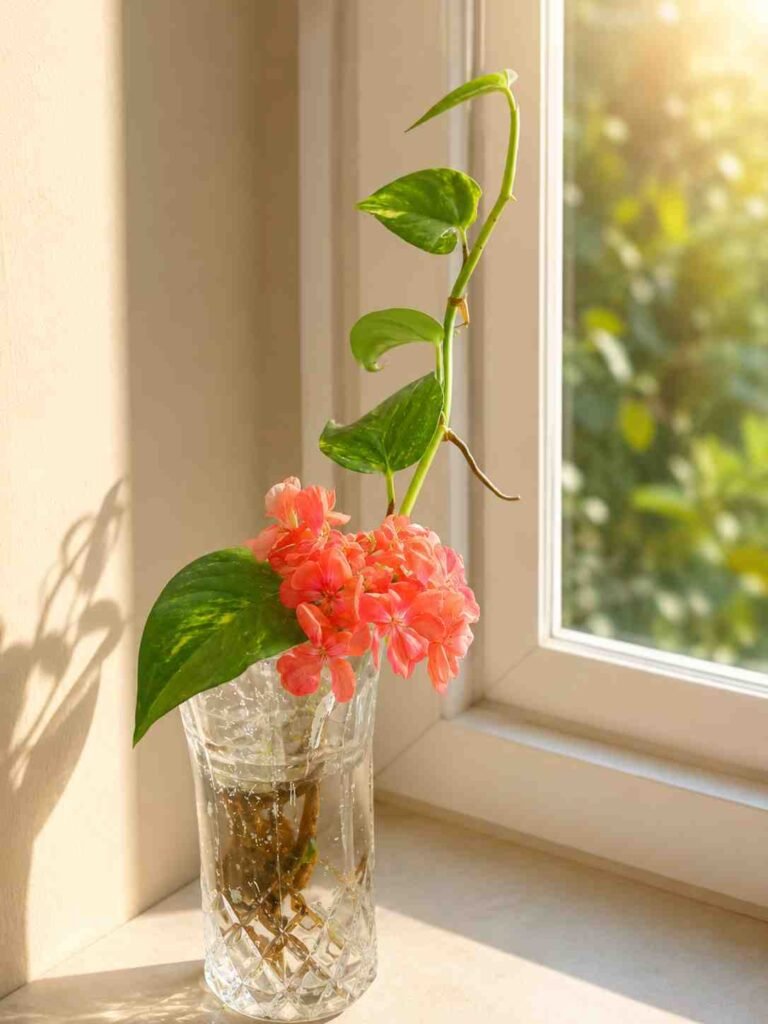
Here is my money plant right now. I’m thinking of giving it a try in the glass vase, making it look beautiful with the combination of geranium flowers, and I also have the potted one.
Frequently Asked Questions (FAQs)
Q1: Can a yellow leaf turn green again?
No. Once a leaf has yellowed, the chlorophyll breakdown is not reversible. Remove the leaf and focus on preventing further yellowing.
Q2: Should I cut off leaves turning yellow immediately?
Yes, once a leaf is more than half yellow, it’s no longer contributing much to the plant and can be trimmed to redirect energy to healthy growth.
Q3: Is one yellow leaf a sign of a serious problem?
Not usually. A single yellow leaf, especially an older lower one, is often just natural aging. Multiple leaves turning yellow at once is the bigger warning sign.
Q4: Why are only the bottom leaves turning yellow?
This is usually caused by natural aging, overwatering, or nitrogen deficiency.
Q5: Can too much fertilizer cause yellow leaves?
Yes. Excess fertilizer can burn roots and cause yellowing, browning, and leaf drop. Always follow the recommended application rate.



3 Comments on “Why Are Your Houseplant Leaves Turning Yellow? (15 Proven Reasons and Their Effective Solutions)”