If you’ve killed a snake plant, I need you to know something first: that’s genuinely impressive. Snake plants are often described as “almost impossible to kill,” but even this famously tough houseplant can develop problems. Yellow leaves, drooping, slow growth, brown tips, and root rot are usually signs that something about the plant’s growing conditions needs to change.
The good news? Most snake plant problems are not mysterious. They usually come down to watering, light, drainage, pot size, temperature, or pests.
I also used to think snake plants were almost impossible to get wrong. They have a reputation for being one of the easiest houseplants to care for, so I assumed they didn’t need much attention.
So, I bought a new Snake Plant and challenged myself, thinking, “How difficult could it be?” But after spending more time around indoor plants, I realized that “low maintenance” doesn’t mean “no care.” Problems like drooping leaves, slow growth, and overwatering can still happen when we don’t understand what the plant actually needs.
That made me curious about the advice we commonly see online about snake plants. How often should they really be watered? Do they actually need very little light? What causes a snake plant to stop growing? And when a plant starts drooping, does it really need more water?
So, instead of simply repeating the usual snake plant-care tips, I wanted to look at these common problems more carefully and separate practical, evidence-based care from popular houseplant myths.
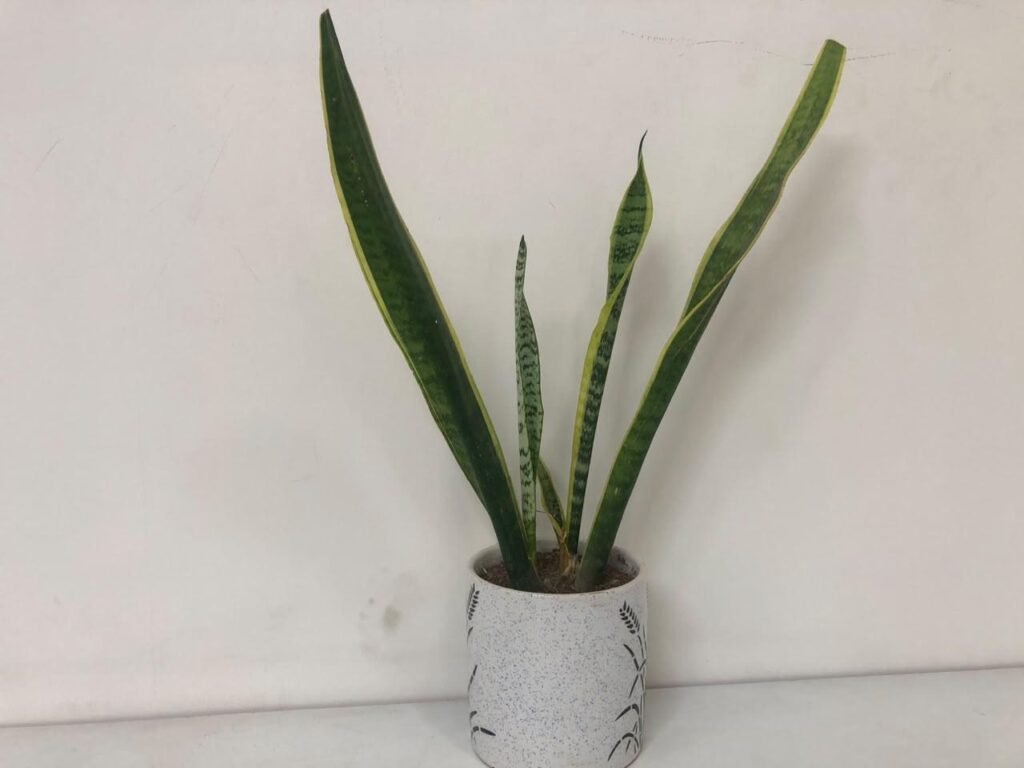
The snake plant is now botanically known as Dracaena trifasciata, although many plant labels and older references still use its former name, Sansevieria trifasciata. It is a succulent-like, drought-tolerant houseplant native to parts of Central and Western Africa. Its thick leaves store water, which helps explain why it generally copes better with dry soil than constantly wet soil.
Table of Contents
This care guide focuses on the 10 most common snake plant problems, what actually causes them, and practical, proven ways to fix them.
Quick Snake Plant Care Guide
Before diagnosing a problem, make sure your basic care is on the right track.
| Care requirement | What your snake plant needs |
| Light | Low to bright indirect light; brighter light generally supports stronger growth |
| Watering Your Plants | Let the soil dry substantially between waterings |
| Soil | Well-draining potting mix |
| Pot | Container with drainage holes |
| Humidity | Average household humidity is usually adequate |
| Temperature | Warm indoor conditions; protect from cold drafts |
| Fertilizer | Light feeding during active growth |
| Repotting | Only when the plant is root-bound, or the soil needs refreshing |
Snake plants tolerate relatively low light, but “tolerates low light” does not mean “does not need light.” Like all plants, they need light to photosynthesize and grow.
Missouri Botanical Garden lists Sansevieria among houseplants that can perform in low-light conditions, while NC State recommends partial shade and notes that the plant can tolerate very low light.
10 Common Problems With Their Symptoms and Solutions
1. Stunted or Stalled Growth
One of the most frustrating things about owning a snake plant is watching it seemingly do nothing for months. You might have the thought, “Why is my snake plant not growing?”
But slow growth isn’t automatically a sign that something is wrong. Snake plants are naturally slow-growing indoor plants that thrive in low light.
However, if your plant has produced no new growth for a long time and looks weak, pale, stretched, or otherwise unhealthy, check its growing conditions.
Common causes
- Insufficient light can cause leggy growth that can stall growth altogether.
- Watering too frequently or too infrequently.
- Poor drainage could also cause slow growth due to lack of oxygen.
- Very low temperatures and root damage can also cause slow growth.
- Lack of nutrients that the plant needs in old potting mix can cause slow growth.
- Seasonal dormancy occurs mainly in the fall and winter, which also pauses growth.
Light is particularly important. A plant can survive in a dim room while producing very little new growth. Missouri Botanical Garden explains that inadequate light can cause poor growth and other symptoms in indoor plants.
How to fix it
Move the plant gradually to a brighter location with indirect light. Avoid suddenly placing a plant that has been sitting in a dark corner into intense direct sunlight, because the leaves can scorch.
Also check the roots and soil. If the soil stays wet for a long time, improving drainage and adjusting your watering routine is more useful than simply adding fertilizer.
Pro Tip: Don’t assume that a snake plant that isn’t growing needs fertilizer. Missouri Botanical Garden notes that yellowing or poor growth can have several causes, including insufficient light, excess fertilizer, temperature problems, or watering issues.
2. Dropping or Floppy Leaves
Healthy snake plant leaves are generally firm and upright. When leaves start leaning, folding, or becoming floppy, something has changed.
The most common culprit is watering trouble, but drooping alone doesn’t tell you whether the plant needs more or less water.
What should you look for?
Check the soil first. Stick your finger into the soil or inspect the root ball.
- If the soil is very dry, then the plant may be dehydrated.
- If the soil is wet for a long time, then the roots may be struggling because of excessive moisture or poor drainage.
This distinction is important because adding more water to an already overwatered snake plant can make the problem worse.
Also look for the following:
- Check the root system to see if there is Root Rot that could not support the leaf anymore, which causes the leaf to flop at its base.
- See if the temperatures are below 55°F (13°C), which can stress the plant and can cause drooping even with perfectly healthy roots.
- Also look for any physical damage. The knocked-over pot or a leaf caught in a doorway could crack the base and cause the leaf to flap. This is totally unrelated to the care given to the plant.
How to fix it
If the soil is completely dry and the plant is otherwise healthy, water thoroughly until excess water drains from the bottom of the container.
If the soil is wet and the plant is drooping, stop watering and investigate the drainage and roots.
Missouri Botanical Garden recommends watering indoor plants thoroughly and allowing excess water to drain rather than repeatedly giving small amounts of water or leaving the pot sitting in water.
3. Yellow Leaves
You might wonder why the leaves of your Snake Plants are turning yellow, but Yellow leaves are one of the most common reasons people start searching for snake plant care advice.
Yellowing is a symptom, not a diagnosis, and it has more than one cause, so the fix depends on what’s driving it.
The mistake is assuming: Yellow leaves = the plant needs fertilizer. Not necessarily.
Symptoms
Here are some symptoms that could cause the leaves to yellow.
For snake plants, excess moisture is one of the first things to investigate, and there is also overfertilizing and natural aging.
- Overwatering can reduce oxygen around the roots and contribute to root problems. NC State specifically identifies overwatering as a cause of root rot in snake plants.
- Overfertilizing that builds up salts can scorch roots and show up as yellowing.
- Natural aging that causes a single old leaf near the base to yellow on its own, with everything else healthy, is just the plant shedding old growth. Not a crisis.
What to check
Ask yourself:
- Is the soil still wet several days after watering?
- Does the pot have drainage holes?
- Is the plant sitting in water?
- Is the soil compacted?
- Are several leaves becoming yellow and soft?
- What is the condition of the root?
If the answer is yes to several of these questions, watering, drainage, and root health are likely part of the problem.
How to fix yellow leaves of Snake Plants?
- Stop watering until the soil has dried appropriately.
- Check that the pot has drainage holes.
- Empty the saucer after watering.
- If the soil remains wet for an unusually long time, consider replacing it with a better-draining mix.
- Inspect the roots if the plant continues declining.
- If it’s fertilizer, flush the soil with plenty of water to remove excess salts and back off on feeding only during the active growing months.
Don’t automatically remove every slightly yellow leaf. Remove leaves that are clearly dying or damaged once you’ve addressed the underlying problem.
4. Overwatering Snake Plants
Overwatering doesn’t simply mean “I gave it too much water once.” It is more often a problem of frequent watering or keeping the root zone wet for too long.
Snake plants store water in their fleshy leaves and tolerate dry conditions. The RHS describes them as drought-tolerant plants that store water in their leaves and recommends allowing the soil to dry completely before watering.
Signs of possible overwatering
You may notice:
- Yellowing leaves
- Soft or mushy leaves
- Drooping despite wet soil
- Dark or mushy roots
- Unpleasant-smelling soil
- Slow or stopped growth
The solution
Don’t follow a fixed watering calendar such as “water every Sunday.”
Instead: Check the soil → assess the environment → water when the plant actually needs it.
Indoor watering requirements change with light, temperature, soil type, pot size, and season. Missouri Botanical Garden specifically recommends judging watering based on the plant and its growing conditions rather than relying solely on a calendar.
5. Underwatering Snake Plants
Snake plants tolerate drought, but they are not indestructible. If the soil becomes extremely dry for an extended period, leaves may become thinner, curl, wrinkle, or lose their firmness.
How to recognize underwatering?
Check the soil rather than relying only on the leaves.
If the soil has the following symptoms, then your plant may need more thorough watering.
- Extremely dry
- Pulling away from the sides of the pot
- Dry deep into the root zone
- Remaining dry despite watering
How to fix it?
Water the soil thoroughly and allow excess water to drain.
If water immediately runs down the sides of a severely dried-out root ball without soaking it, the soil may have become difficult to re-wet. Missouri Botanical Garden notes that very dry potting mixes can become difficult to moisten and may require thorough rehydration.
Afterward, don’t compensate by watering every day. Return to a water-then-dry cycle appropriate for your plant and environment.
6. Snake Plant Leaves Curling or Developing Brown Tips?
When you see Brown tips, you may think your plant is dying. But it is not always the case. In the case of Snake Plants too, you may wonder why your Snake Plants have leaves thinner than normal with vertical wrinkles or ridges running down them, sometimes curling inward.
Causes of Wrinkled or Curling Leaves
Several environmental problems can produce brown or damaged foliage, including:
- Very dry conditions
- Irregular watering
- Excess fertilizer or salt buildup
- Temperature stress
- Direct sunlight or scorching
- Physical damage
NC State notes that brown leaves in Dracaena species can be associated with low humidity or salt accumulation, while direct sunlight can scorch leaves.
Prevention
First, look at the pattern.
- If only the tips are brown but the rest of the leaf is firm and healthy, the problem may be relatively minor.
- If large areas are becoming brown, crispy, yellow, or soft, investigate watering and light more carefully.
- Avoid putting the plant directly beside a heater, air-conditioning vent, or a window where intense sunlight heats the leaves.
7. Wrong Pot Size For Your Snake Plant
A surprisingly common problem is choosing a pot that is too large or too small.
It is tempting to give your snake plant plenty of room because you expect it to grow. But a very large container holds more soil, and that soil can stay wet longer than a smaller root system needs.
That increases the risk of root problems.
The University of Minnesota Extension recommends increasing houseplant pot size by only about 2–3 inches in diameter when repotting and warns that oversized containers can increase the risk of root rot.
Signs your snake plant may need repotting
Look for:
- Roots emerging from drainage holes
- The plant becoming unstable or top-heavy
- Water running through the pot unusually quickly
- Roots filling most of the container
- Soil that has deteriorated or no longer absorbs water properly
How to choose a new pot
Don’t jump from a small pot to a huge decorative planter.
Choose a container only moderately larger than the current root system and, most importantly, make sure it has drainage holes.
8. Root Rot (The Actual #1 Killer)
Root rot is one of the more serious problems of a Snake plant, and overwatering is a major risk factor.
You may notice Yellow leaves starting from the base, a soft or mushy feel when you squeeze the lower leaves, a sour or musty smell from the soil, and leaves that eventually collapse.
What’s really happening?
Snake plants (Dracaena trifasciata, formerly Sansevieria) grow from a shallow rhizome and evolved in rocky, fast-draining soils in West Africa.
When soil stays wet, oxygen in the root zone gets squeezed out, and that’s the opening for fungal pathogens, commonly Fusarium, Phytophthora, Pythium, and Rhizoctonia, to move in and start breaking down the roots and rhizome from the inside out.
Once the tissue is dead, it’s dead; there’s no reviving already-rotted roots, only stopping the spread.
Penn State Extension specifically identifies root rot as a common problem of snake plants because of overwatering.
What healthy roots should look like?
Healthy roots should be firm rather than mushy.
Roots affected by rot may become:
- Dark
- Soft
- Mushy
- Easily damaged
If your plant has yellowing or wilting leaves while the soil remains wet, checking the roots can reveal what is happening below the surface.
How to respond?
If you suspect root rot:
- Remove the plant carefully from its pot.
- Inspect the roots.
- Remove clearly rotten, mushy tissue with a clean tool.
- Replace excessively wet or deteriorated potting mix.
- Use a clean pot with drainage.
- Allow the plant to dry appropriately before resuming normal watering.
Don’t simply add fertilizer to a plant with damaged roots. The priority is to correct the root environment.
Remember: If the crown (the base where leaves emerge) has gone soft or smells bad, the infection is too far along. It’s usually not salvageable at that point. Repot into fresh, fast-draining succulent/cactus mix in a pot with drainage holes, sized only 1–2 inches larger than the root mass.
9. Pests: Mealybugs, Spider Mites, or Fungus Gnats?
Snake plants are relatively resistant to pests, but they are not completely pest-proof. Penn State identifies mealybugs and spider mites as occasional snake plant pests.
Here’s what you may see, which could be different pests, and what can be done to prevent them:
Mealybugs
These often look like small white, cottony clusters around leaf joints or other protected areas. For a small infestation, physically removing the insects can be useful.
University of Minnesota Extension recommends using a cotton swab with rubbing alcohol for individual mealybugs, while larger infestations may require additional treatment.
Spider mites
These are tiny and can be difficult to see. Look for:
- Fine webbing
- Speckled or dull-looking leaves
- Declining foliage
Treating the plant appropriately and improving its growing conditions can help, but severe infestations may require a labeled houseplant pest treatment.
For spider mites, a strong rinse in the shower followed by insecticidal soap or neem oil applied to all leaf surfaces (including undersides) usually clears an infestation within a couple of weeks.
Improving humidity slightly can also make the plant less hospitable to spider mites going forward, since they favor dry conditions.
Fungus gnats
If tiny black flies are hovering around the soil, your spider plant may have fungus gnats. They are strongly associated with consistently moist potting soil.
University of Minnesota Extension recommends allowing the soil to dry to an appropriate level between waterings and using yellow sticky traps to catch adults.
So once again, good watering practices are part of pest prevention.
10. Snake Plant Leaning or Falling Over?
You may even wonder what could be the reason behind your snake plant leaning or falling over. And the pondering is reasonable. When you see the entire plant leaning, you might immediately assume it needs more water. But it is not the only reason.
What can cause it?
Here are a few things that can cause a leaning snake plant:
- Uneven light
- A top-heavy plant
- Root problems
- A container that is too small or unstable
- Damaged or weakened leaves
- Poor positioning
Where to Start From?
Start from the roots.
- If the plant is suddenly falling over and the soil is very wet, inspect the root system.
- If the roots are healthy but the plant is simply becoming top-heavy, a more stable container may help.
- Also rotate the plant periodically so that one side isn’t consistently receiving all the available light.
- If individual leaves are damaged or collapsing, Penn State recommends removing damaged leaves by cutting them at soil level.
Other Factors to Watch out for Your Spider Plants
How Often Should You Water a Snake Plant?
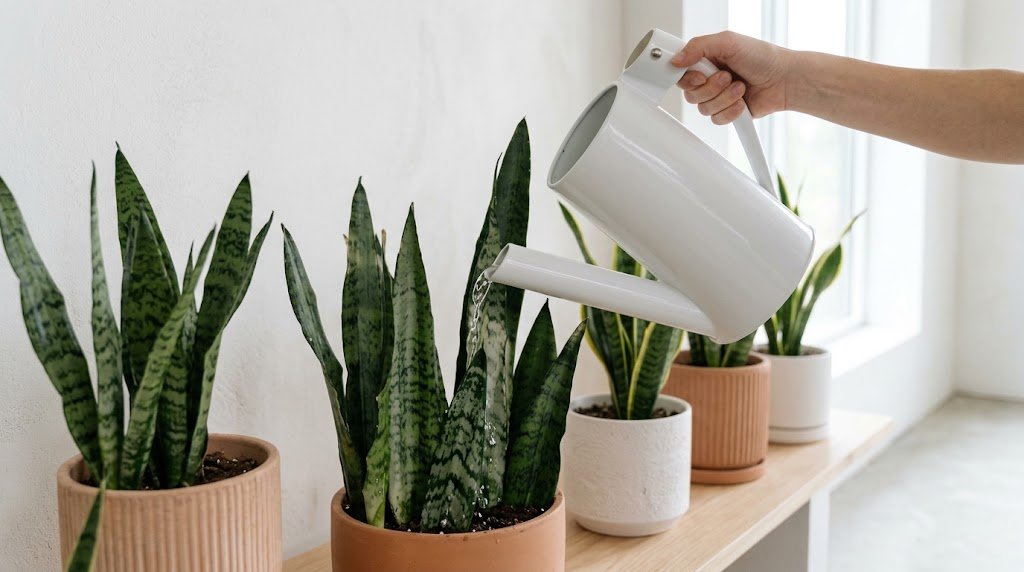
This is probably the most important question to answer correctly. But there is no universal number of days that works for every snake plant.
A plant sitting beside a bright window in a warm room can dry much faster than one sitting in a cool, dim room.
So, instead of asking: “Is it time to water my snake plant?”
Ask: “Has the soil dried enough for my plant’s current conditions?”
When watering:
- Check the soil first.
- Water thoroughly.
- Allow excess water to drain.
- Empty the saucer.
- Wait until the soil has dried sufficiently before watering again.
Missouri Botanical Garden recommends this thorough-watering-and-draining approach for indoor plants and advises against leaving plants sitting in excess water.
How Much Light Does a Snake Plant Need?
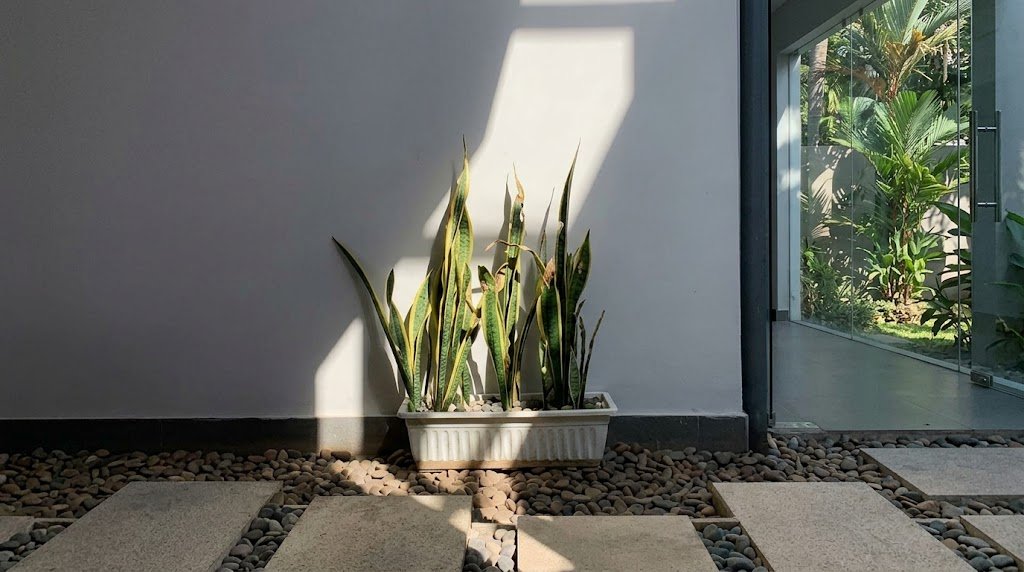
Here’s another common misconception: “Snake plants don’t need light.”
They do.
Snake plants are simply more tolerant of low-light conditions than many other indoor plants.
Missouri Botanical Garden lists Sansevieria among plants that can grow in low-light areas, while NC State recommends partial shade and notes that the plant can tolerate very low light.
For stronger growth, give your plant a bright location with indirect light. Some gentle direct sunlight can be tolerated, but suddenly moving a plant from a dark room into intense sun can cause leaf scorch.
If your snake plant isn’t growing, improving light is usually more sensible than immediately adding fertilizer.
Should You Fertilize a Snake Plant?
Yes, but don’t overdo it. Snake plants are not heavy feeders, particularly when they are growing slowly in low light.
Penn State Extension recommends fertilizing snake plants monthly during the growing season with an all-purpose fertilizer at half strength.
A practical approach is:
- Fertilize during active growth.
- Use a diluted, balanced houseplant fertilizer.
- Avoid heavy feeding.
- Reduce or stop feeding when growth slows significantly.
More fertilizer does not automatically mean more growth. In fact, excessive fertilizer can contribute to salt buildup and plant damage.
Do Snake Plants Need High Humidity?
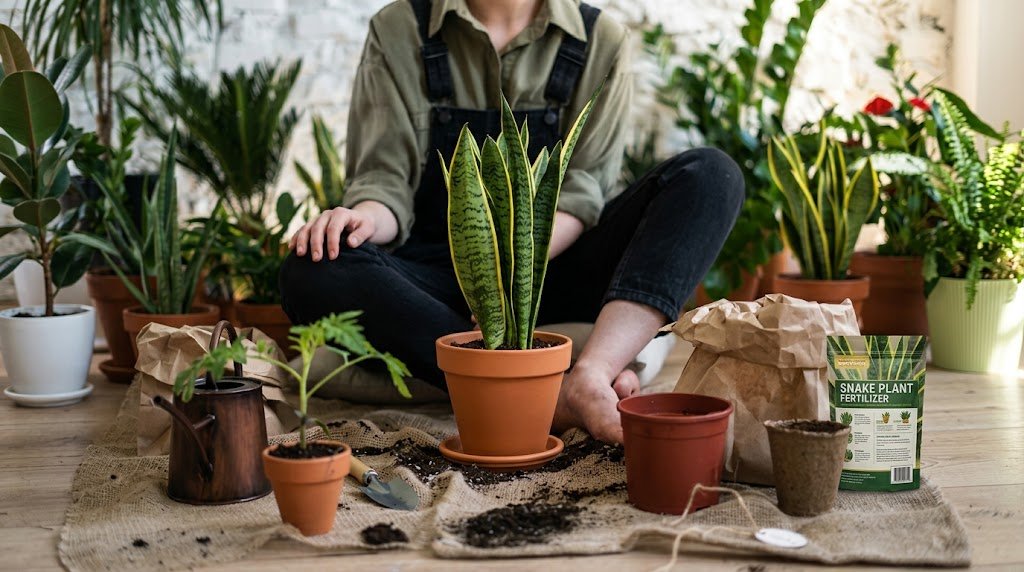
No. This is one area where snake plants are much easier than many tropical indoor plants.
They tolerate relatively dry indoor conditions, so you generally don’t need to mist them every day or purchase a humidifier just for a snake plant.
NC State notes that snake plants tolerate low humidity, while the RHS describes them as robust and drought-tolerant.
Good watering, drainage, light, and temperature are generally more important than trying to create a very humid environment.
Are Snake Plants Really Air-Purifying Plants?
You have probably seen claims of snake plants based on a “NASA study”:
- Remove toxins like formaldehyde and benzene from your home’s air
- Clean indoor air
- Produce large amounts of oxygen at night
- Improve sleep
These claims are often repeated online without sufficient context. This isn’t a plant problem, but it’s the single biggest myth attached to this species, so it earns a spot on the list.
The NASA study is real, and it’s a 1989 report testing houseplants inside small, sealed, airtight lab chambers designed to mimic space-station conditions, not an average bedroom.
Later analysis found that reproducing those results in a real home would require somewhere in the range of dozens to hundreds of plants per square meter of floor space, since normal air exchange through doors, windows, and HVAC systems moves and dilutes air far faster than any houseplant can filter it.
A 2019 review of a dozen studies on the subject concluded that houseplants don’t meaningfully improve indoor air quality in real buildings, and researchers have specifically pushed back on viral claims that a handful of snake plants can generate enough oxygen to keep a sealed room survivable.
Snake plants do use CAM photosynthesis, meaning they take in carbon dioxide and release oxygen at night rather than during the day; that part is genuinely true and kind of neat. It’s the leap from “does this at a molecular level” to “will meaningfully change the air quality of your bedroom” where the myth falls apart.
Snake plants perform photosynthesis like other green plants, but you shouldn’t buy one expecting it to function as an air purifier or replace ventilation and filtration.
The real reason to keep one: It’s not filtering your air, but it is genuinely good for you in other ways. Indoor plants are consistently linked to lower reported stress, better mood, and a general sense that a space feels more alive. That’s a real, evidence-backed benefit. It’s just a different one than the internet promised you.
A houseplant can be a beautiful addition to your home, but it is better to appreciate it for its appearance, adaptability, and relatively low-maintenance care rather than promising health benefits that haven’t been established in ordinary household conditions.
Are Snake Plants Safe for Pets?
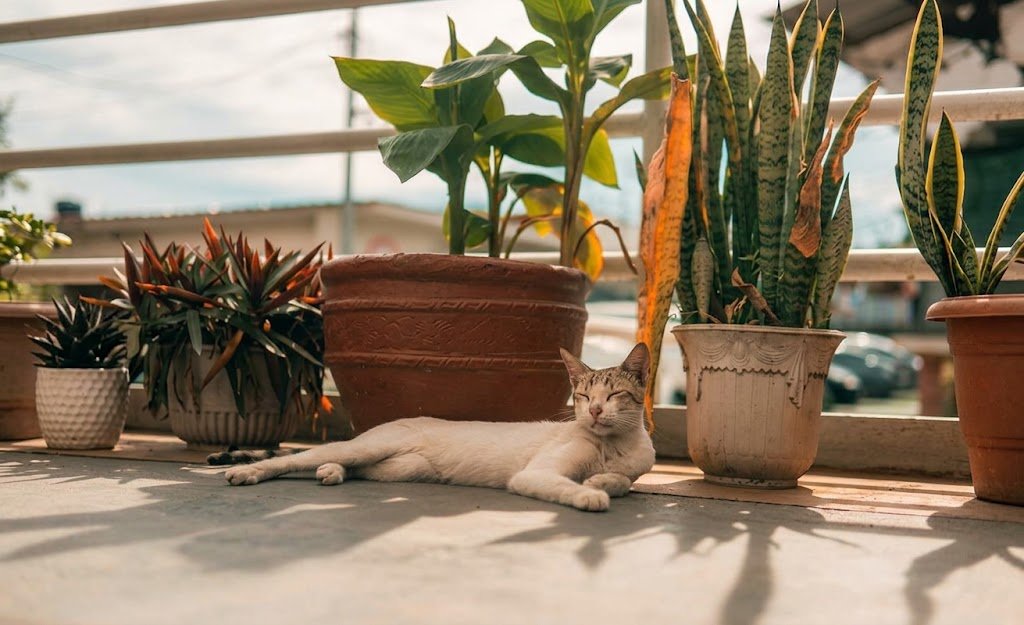
This is one claim that should not be treated as a myth. Snake plants are toxic to cats and dogs if eaten.
The ASPCA identifies Sansevieria trifasciata as toxic to both dogs and cats because of saponins. Reported signs include nausea, vomiting, and diarrhea.
If you have a curious cat or dog that likes chewing plants, keep your snake plant somewhere inaccessible. But this doesn’t mean you need to avoid owning one altogether. It simply means placement matters.
Snake Plant Care: The Simple Formula
If you want to remember only a few things, remember these:
- ☀️ Give it light: Snake plants tolerate low light, but they still need light to grow.
- 💧 Don’t water automatically: Check the soil instead of following a rigid weekly schedule.
- 🪴 Use drainage: A pot with drainage holes is much safer than a decorative container that traps water.
- 🌱 Don’t oversize the pot: A slightly larger pot is better than a huge container filled with wet soil.
- 🌿 Don’t over-fertilize: Slow growth doesn’t automatically mean your plant needs more fertilizer.
- 🔍 Check the roots: If the leaves look unhealthy and the soil stays wet, inspect what’s happening below the soil.
- 🐛 Check for pests: Occasionally inspect the leaves and leaf bases for mealybugs and spider mites.
- 🐕 Keep it away from pets: Snake plants are toxic to dogs and cats if ingested.
Final Thoughts: A Healthy Snake Plant Doesn’t Need Complicated Care
Snake plants have earned their reputation as beginner-friendly plants for a reason. They tolerate low light, dry soil, and occasional neglect better than many popular houseplants. But that doesn’t mean they thrive under every condition.
The biggest mistake is often trying too hard.
Watering a snake plant every week just because it’s Sunday, placing it in an oversized pot, fertilizing whenever it stops growing, or moving it suddenly into harsh sunlight can create more problems than they solve.
Instead, pay attention to what the plant and soil are telling you.
Dry soil doesn’t always mean emergency. Slow growth isn’t necessarily a problem. Yellow leaves aren’t automatically a fertilizer deficiency. And drooping doesn’t always mean the plant needs water.
Good snake plant care is really about understanding the balance between light, water, drainage, and the plant’s natural slow-growing habit.
Once you get that balance right, this tough houseplant can remain healthy for years with surprisingly little fuss.
Frequently Asked Questions
How often should I water a snake plant?
Don’t use a fixed calendar. Check the soil and allow it to dry substantially before watering again. Environmental conditions such as light, temperature, soil, and pot size affect how quickly the plant dries.
Why is my snake plant not growing?
Low light is one possible reason. Slow growth can also be normal, particularly indoors. Check light, roots, watering, temperature, and soil before adding fertilizer.
Can a snake plant recover from root rot?
Sometimes, if it’s caught early and the crown (base) hasn’t gone soft or smelly yet. Cut away all affected roots, repot in fresh well-draining soil, and hold off on watering for at least a week. If the rot has reached the crown, the plant usually can’t be saved, though healthy offsets nearby sometimes can be.
Why are my snake plant’s leaves splitting or falling over?
Splitting and floppy leaves are almost always root-related, either rot from overwatering or a rootbound plant that’s outgrown its pot. Check the roots before assuming it’s anything else.
Should I cut off yellow snake plant leaves?
Remove leaves that are completely dead or badly damaged, but first determine why they turned yellow. Otherwise, you may remove symptoms without correcting the underlying problem.
What size pot does a snake plant need?
Choose a pot only modestly larger than the existing root system and make sure it has drainage holes. Oversized containers can stay wet longer and increase root-rot risk.
Can snake plants grow in low light?
Yes. Snake plants are relatively tolerant of low light, but they still need light to photosynthesize and grow. They just don’t need direct intense sunlight. Although slower, brighter indirect light can generally support better growth.
Are snake plants safe for cats and dogs?
No. ASPCA lists snake plants as toxic to cats and dogs if ingested.